Critical Appreciation – Constructive Criticism

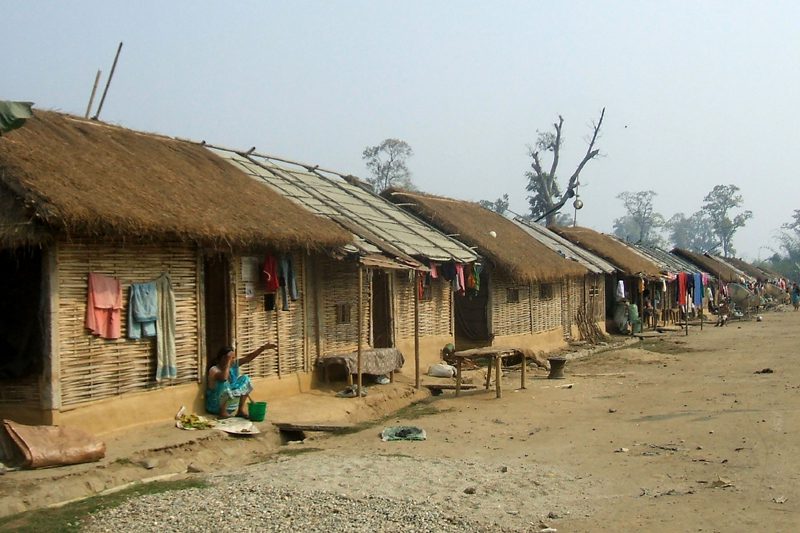
There was a time when Bhutanese refugees needed no introduction in Nepal. They were everywhere in Nepal- in guise or in disguise. That was between 1991 and 2017. The situation has changed. There are fewer refugees compared to the strength of 2006 when the Refugee organisations carried out a census with an intention to relocate them to third countries for good. Soon after the holistic census of 2006/2007, the Third Country Resettlement (TCR) of the Refugees from the camps to nine first world countries began- as planned by the UNHCR and the core group of Countries for Bhutanese refugees in Nepal (Core Group). Those left behind in the camps and in Nepal number be- tween four and ten thousand. This wide variation in the number is the core of the complexity that sustains problem infinitely. Various sources claim that there are thirty-five hundred to four thousand residual refugees in two camps at Pathri and Beldangi. There are people who were once registered refugees but got deregistered if they missed the census without a reason. While a majority of the people in the small population are dedicated to repatriation regardless of other available options-whether they are gloomy or glittering, the one option at hand is a local solution. As long as refugees don’t ask for integration in Nepal, openly and convincingly, there is little the government of Nepal (GON) or UNHCR can do in that direction. However, significant steps on local assimilation are underway. The schools in the refugee camps are limited to primary level. For secondary level education refugee children are accommodated in lo- cal schools. The upcoming generation is growing up with Nepali syllabus and Nepali nationalism. For them, Bhutan is everything they see in the camp and learn in the local schools. The factors playing within the camp and with the refugees are as active as ever. The society is divided into fragments of all spheres. Adult literacy…

Introduction Bhutan has emerged well as a promoter of happiness parameter to measure the status of social wellbeing. However, the country failed to ensure that the principle becomes part of the Bhutanese society. Bhutan talked much of happiness, implemented less of it. Bhutanese, in all, failed to feel they are happy. Bhutan King’s ingenious idea of Gross National Happiness over Gross Domestic Product to measure development has stoked interests among many western scholars, governments and students. The fact is that the idea of happiness had evolved well before the enthronement of the King Jigme Singye Wangchuk in Europe and entered Bhutan in late 1990s. What Bhutan did is just coining a new term for it – Gross National Happiness. Early philosophers have extensively discussed the need of happiness as essential part of the in human existence. The ideal concept lost its track with growing influences of consumerism that sought happiness in material possession than on solace of inner self. Yet, search for happiness had not ended up all. Today, this has come up as an idea of fusion between positive psychology and economics. You must be mentally sound and economically well to live a happy life. Certainly the pursuit of happiness is not a new concept. The American Declaration of Independence eloquently makes a passing reference to it as the right of human to life, liberty and pursuit of happiness. Nevertheless economists have shied away from pursuing the path of happiness for long claiming that there is no scientific basis to measure happiness. But things seem to be changing. Happiness in Buddhist, Hindu and Stoic sense points towards detachment and comes from within, not outside and this makes amuses among the western scholars. From that point of view, certainly the material development becomes pointless and of no consequence to actual happiness. Tibet, Nepal and Bhutan make up most of the Himalayan range and were seen as the exotic place. The…

Status of Press Freedom, Right to Information and Freedom of Expression in Bhutan 2019 ACRONYMS FORWARD SUMMARY RIGHT TO INFORMATION ORGANISED EFFORTS FREEDOM OF EXPRESSION POLITICAL COMMITMENTS PROFESSIONAL DEVELOPMENT ATTACK ON MEDIA JAB AND ITS ROLE CONCLUSION ANNEXURE Acronyms BBSC – Bhutan Broadcasting Service Corporation (also refer as BBS) BCMD – Bhutan Centre for Media and Democracy BICMA – Bhutan Information, Communication and Media Authority BKP – Bhutan Kuen-nam Party BMF – Bhutan Media Foundation DNT – Druk Nyamrup Tshogpa DPT – Druk Phuensum Tshogpa ECB – Election Commission of Bhutan EVM – Electronic Voting Machine GDP – Gross Domestic Product GNH – Gross National Happiness IFJ – International Federation of Journalists INGO – International Non-governmental Organisation JAB – Journalist Association of Bhutan LDC – Least Developed Country MoIC – Ministry of Information and Communication NA – National Assembly NC – National Council PDP – People’s Democratic Party PSB – Public Service Broadcasting RCSC – Royal Civil Service Commission RENEW – Respect, Educate, Nurture and Empower Women RSF – Reporters Sans Frontiers RTI – Right to Information Go to top FORWARD Even after a decade of parliamentary democracy introduced, institutionalising press freedom is still proving to be problematic. The governments and political leadership have expressed solidarity to respect freedom of the press, but it seems only lip service is being paid to it, with them not bringing legislation favourable to press freedom and not providing enough state support and not taking initiatives to help media professionals facing challenges. The only union of the journalists Journalist Association of Bhutan (JAB) has almost become the rubberstamp of the government. The right to information is the fundamental rights enshrined by the Constitution but the lack of legal mechanism to access the public information for last 10 years itself speaks the volume of Bhutan’s state of press freedom. The continued decline in the World Press Freedom index published by Reporters Sans Frontiers (RSF) also…