Critical Appreciation – Constructive Criticism

ABSTRACT On average 75 billion tons of freshwater exit from Bhutan every year. Freshwater of the Himalayas is used for domestic purposes, to irrigate fields and to generate hydroelectricity among many other uses. Bhutan is perhaps one of the few countries rich in freshwater. The per capita share of freshwater may be one of the highest in the world. A Food and Agriculture Organisation (FAO) report mentioned that Bhutan’s per capita fresh water was 108,476, 557 liters in 2014 – the fifth highest in the world. Yet, the water on each person’s share is of little use, as they don’t get to use it. The methods and policies used in the past were effective in using water. Due to a shift in peoples’ lifestyle and habits, previous system of water management is not enough to meet their future needs. In all cases, water is redirected to rivers or evaporates into atmosphere directly. Here, an academic discussion is carried out on perspective of water use in Bhutan. Keywords: erosion, fresh water, glacial lakes, hydroelectricity, irrigation, pollution Introduction The Himalayas, of which Bhutan is part of, is a natural water condenser that converts water vapor into freshwater. Two factors, high altitude and continuous mountain ranges intercepting monsoon clouds help to complete water cycle. The tall mountains not only convert clouds into water that flows downhill as streams, rivulets, and rivers but also store water in the form of ice for slow release.  Himalayan ranges within Bhutan have altitude from 97 m (318 ft) to 7,528 m (24,698 ft) above sea level. The aerial measurement is 305 km from west to east and 145 km from south to north (Dubey, 1978) with an area of 47,000 sqkm (Figure 1). However, approximately 8,500 sqkm is under stake with China and India leaving only 38,500 sqkm in government’s diplomatic references (Rizal, 2013). A report on water resources management plan by Royal Government of Bhutan (RGoB)…
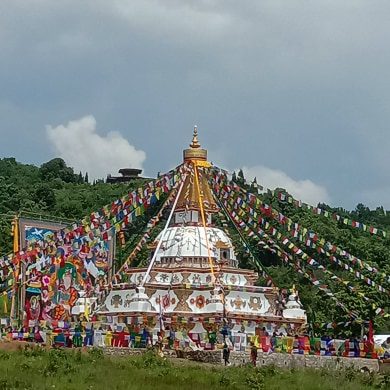
The Nepali version of Buddhism is penetrating in Bhutan in an apparent effort of the Bhutanese government to tighten the grip on the Hindus and to ward off the growing influence of Vishwa Hindu Federation. On 12 June 2019, a chaitya resembling Swayambhunath of Kathmandu valley was inaugurated in Damphu which is a heart of the Hindu culture and civilization in Bhutan. Hindu religion which is also linked to the Nepali language in Bhutan was for a couple of decades symbolised an anti-current entity of Drukpa-Buddhist bravado. His Holiness Je Khenpo Jigme Choedra, the head of the Buddhism in Bhutan, inaugurated the monastery. It was attended by the officers and people of Chirang district. In Bhutan, there has been a constant state pressure on minority Hindus to adopt Buddhism. The first session of the national assembly of Bhutan in 1953 had resolved to convert all the Bhutanese people who spoke Nepali and followed Hinduism into Dzongkha speaking and Buddhism following citizens. The states’ continuous effort led to an expulsion of unmalleable citizens into exile, in the 1990s. Thereafter the remaining Bhutanese population took up the Dzongkha language and soon became more proficient than the native speakers. The imposition of religion was not that easy. Decades of exercises, rules, policies, and lures to metamorphose the Hindus to Buddhists failed. The people rather resorted to Christianity for freedom of worship. No church exists in Bhutan. The constitution does not allow the acceptance of a religion that was not in practice in the country for the last fifty years. Christianity falls in that category. The number of Christian converts has grown tremendously. In the International Nepali Speaking Christian Pastors’ Conference held in Kathmandu last March, at least one hundred Bhutanese pastors were present. It was mentioned in the program that there are fifty to sixty thousand Jesus worshipers in Bhutan. They have no Church but there are no legal hassles congregating in private…

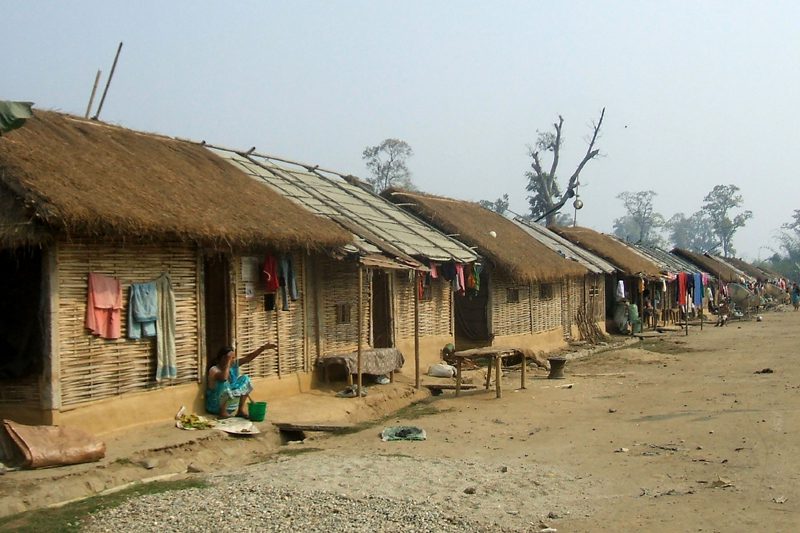
There was a time when Bhutanese refugees needed no introduction in Nepal. They were everywhere in Nepal- in guise or in disguise. That was between 1991 and 2017. The situation has changed. There are fewer refugees compared to the strength of 2006 when the Refugee organisations carried out a census with an intention to relocate them to third countries for good. Soon after the holistic census of 2006/2007, the Third Country Resettlement (TCR) of the Refugees from the camps to nine first world countries began- as planned by the UNHCR and the core group of Countries for Bhutanese refugees in Nepal (Core Group). Those left behind in the camps and in Nepal number be- tween four and ten thousand. This wide variation in the number is the core of the complexity that sustains problem infinitely. Various sources claim that there are thirty-five hundred to four thousand residual refugees in two camps at Pathri and Beldangi. There are people who were once registered refugees but got deregistered if they missed the census without a reason. While a majority of the people in the small population are dedicated to repatriation regardless of other available options-whether they are gloomy or glittering, the one option at hand is a local solution. As long as refugees don’t ask for integration in Nepal, openly and convincingly, there is little the government of Nepal (GON) or UNHCR can do in that direction. However, significant steps on local assimilation are underway. The schools in the refugee camps are limited to primary level. For secondary level education refugee children are accommodated in lo- cal schools. The upcoming generation is growing up with Nepali syllabus and Nepali nationalism. For them, Bhutan is everything they see in the camp and learn in the local schools. The factors playing within the camp and with the refugees are as active as ever. The society is divided into fragments of all spheres. Adult literacy…