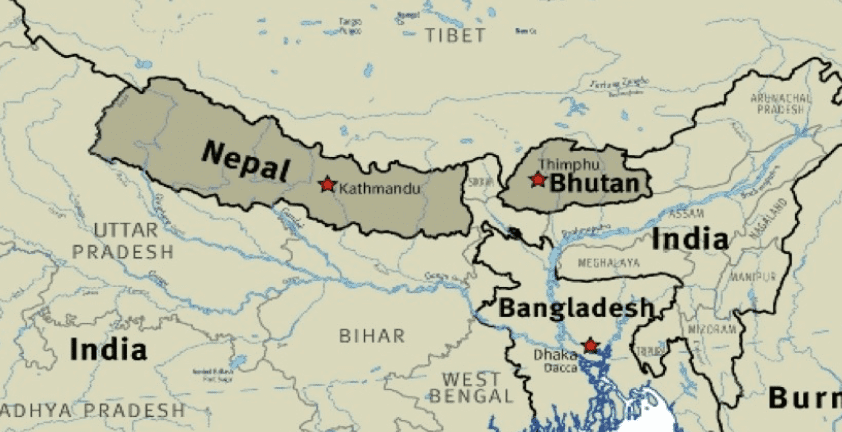
ABSTRACT A breakthrough in Nepal-Bhutan relationship in the past had been rendered near impossible given the mistrust over refugee issue coupled with lack of autonomy in Thimpu vis-à-vis conduct of its foreign and defence policy. With resettlement of most Bhutanese refugees in third-countries and revision of Bhutan-India Friendship Treaty 1949, there is tremendous scope for strong bilaterally beneficial relationship now. But this will only gain meaningful traction by addressing the refugee saga in some manner. Since only a handful of refugees remain in camps now, Bhutan can offer to repatriate the remaining refugees under the same process agreed during Joint Ministerial Committee (JMC) meetings and Joint Verification Team (JVT) mechanism without any significant costs. At this stage this may symbolic at best, but will help provide a closure to all parties involved: Nepal can declare success in its bilateral diplomatic dealings; it will help Bhutan salvage its reputation in international forums while further cementing its autonomy in the conduct of its foreign policy; and this will also help close a painful chapter for thousands of Bhutanese refugees who have now become citizens of some other countries. Keywords: Bhutan; diplomacy, Nepal; refugees, relationship; Introduction There are many similarities between Nepal and Bhutan. Both countries straddle the Himalayas and are landlocked—surrounded by India and China. The two countries have huge hydropotentials and can be energy powerhouse of the region. Both the countries are members of Non-Aligned Movement (NAM) and founding members of South Asian Association for Regional Cooperation (SAARC) (Bhattarai, 2019). The two countries have joined Bay of Bengal Initiative for Multi-Sectoral Technical and Economic Cooperation (BIMSTEC) since 2004 (BIMSTEC, 2019). Historically, the two countries have been friends. Even as Nepal began experimenting democratic rule since the 1950s, it was not until early 90s that Bhutan transitioned to some semblance of democracy. Bhutan is home to a sizeable population of Nepali origin—with records of migration dating back as far back as early…