ABSTRACT Security threat posed by rising China in Indo-Pacific region has raised fear of possible shift in the world order – that had remained under tight fist of the United States for over a century. China is flexing its economic and military muscles that is likely to substitute America’s dominance in international politics. As China crawls into Asia Pacific region, the US has unveiled its new strategy to counter the rise of Communist China. Regional allies and stronger security relation are of paramount importance for this strategy to succeed. This paper examines what Indo-Pacific Strategy means for South Asia and Bhutan in particular. How this tiny Himalayan Kingdom would play its role and what are possible advantages? It also includes the role of India in courting Bhutan into the bigger international gambit to surround China and what India and US must do jointly to ensure the success of the strategies. Key words: communism, democracy, diplomacy, military, politics, strategies, Indo-pacific Introduction While unveiling Indo-Pacific Strategies in 2018, US Secretary of State Mike Pompeo said “American people and the whole world have a stake in the Indo-Pacific’s peace and prosperity. It’s why the Indo-Pacific must be free and open (Hartman, 2019).” US state department describes this statement as ‘an ironclad and enduring commitment’ (US State Department, Office of the Assistant Secretary, 2018) to the region. The strategy basically targets creating more democratic and open society in Indo-Pacific region to counter China’s undemocratic growing influence. Bhutan is small country but can be a major player under this flagship strategy within the Indian domain. India’s involvement in engaging Bhutan on this strategic initiative of the US government is of paramount important. The initiative must not ignore the undemocratic behaviours of Bhutan government– past and present. India is not an alien when it comes to the Bhutanese refugee issue. For decades, a democratic country aligned with an absolute monarchy to curb the voice for democratic…
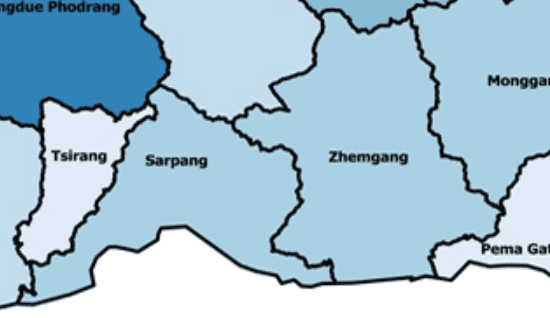
Sarpang and Zhemgang districts have become the hotspot of political wrangling in Bhutan for over a month. The iron is still hot and none of the parties are willing to back off from their allegations against the other. The race is unlikely to settle soon, if no royal intervention made. However, royal intervention will be unconstitutional though softer approach is not unanticipated. Cause The battle begun with government’s decision to remove Zhemgang district from national tourism flagship programme and replace it with Sarpang. The government proposal passed the parliament for Nu 200 million worth of tourism programmes for the fiscal year 2019-20 out of the Nu 1 billion in the 12th Plan where Zhemgang was supposed to be the beneficiary, not Sarpang. The idea to include southern district in the flagship programme and open southern doors for tourists was initially presented by the opposition party – Druk Phuensum Tshogpa (DPT). The government resisted the idea saying Bhutan does not have appropriate and adequate infrastructure for border security to run such programme. Upon opposition’s pressure, government agreed to open entry points in southern districts. Initially government proposed for Dagana, Gasa, Lhuentse and Zhemgang. The districts were means to have regional balance. Dagana representing southern region, Gasa the western, Lhuentse the central and Zhemgang eastern region. With Zhemgang being replaced by Sarpang, the eastern region has now been left out with the programme. Allegations Opposition party DPT alleged that government deprived the district of national programme because the district voters did not choose Druk Nyamrup Tshogpa (DNT) in last election. Zhemgang’s both representatives in the National Assembly are from the opposition party – DPT. The Opposition approached the Speaker of National Assembly to revoke the government decision. However, speaker opined that government has the authority to make changes in the budget appropriation and alter programmes as needed. The Office of Attorney General – the legal advisor to the government – also favoured government’s…
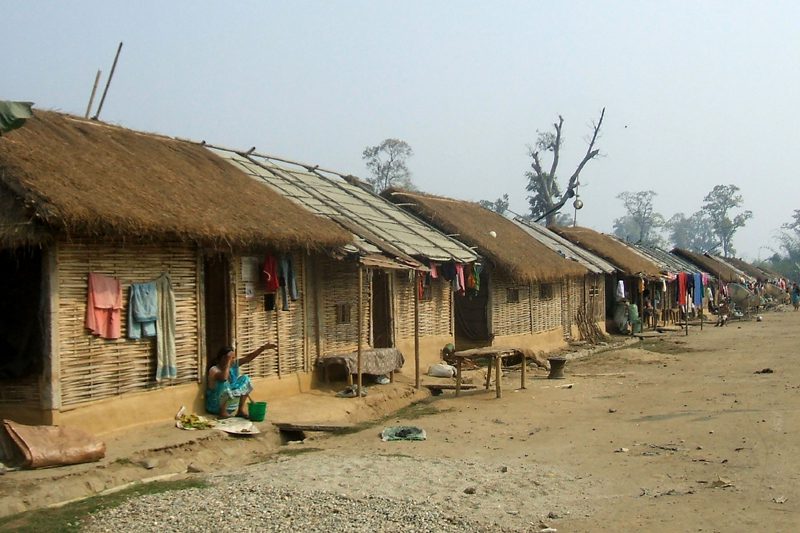
There was a time when Bhutanese refugees needed no introduction in Nepal. They were everywhere in Nepal- in guise or in disguise. That was between 1991 and 2017. The situation has changed. There are fewer refugees compared to the strength of 2006 when the Refugee organisations carried out a census with an intention to relocate them to third countries for good. Soon after the holistic census of 2006/2007, the Third Country Resettlement (TCR) of the Refugees from the camps to nine first world countries began- as planned by the UNHCR and the core group of Countries for Bhutanese refugees in Nepal (Core Group). Those left behind in the camps and in Nepal number be- tween four and ten thousand. This wide variation in the number is the core of the complexity that sustains problem infinitely. Various sources claim that there are thirty-five hundred to four thousand residual refugees in two camps at Pathri and Beldangi. There are people who were once registered refugees but got deregistered if they missed the census without a reason. While a majority of the people in the small population are dedicated to repatriation regardless of other available options-whether they are gloomy or glittering, the one option at hand is a local solution. As long as refugees don’t ask for integration in Nepal, openly and convincingly, there is little the government of Nepal (GON) or UNHCR can do in that direction. However, significant steps on local assimilation are underway. The schools in the refugee camps are limited to primary level. For secondary level education refugee children are accommodated in lo- cal schools. The upcoming generation is growing up with Nepali syllabus and Nepali nationalism. For them, Bhutan is everything they see in the camp and learn in the local schools. The factors playing within the camp and with the refugees are as active as ever. The society is divided into fragments of all spheres. Adult literacy…