Critical Appreciation – Constructive Criticism

Editorial Welcome to the first issue of Bhutan Journal. Citation: Bhutan Watch. (2020). Editorial. The Bhutan Journal, 1(1); 5. doi.org/10.55564/tbj11edtr20 Waters of Bhutan Govinda Rizal On average 75 billion tons of freshwater exit from Bhutan every year.  Bhutan is perhaps one of the few countries rich in freshwater. Bhutan’s per capita fresh water was 108,476, 557 liters in 2014. Yet, the water on each person’s share is of little use, as they don’t get to use it. Citation: Rizal, G. (2020). Waters of Bhutan. The Bhutan Journal, 1(1); 6-16. doi.org/10.55564/tbj11gr20by Bhutan Within the Indo-Pacific Strategies C M Niroula The security threat posed by rising China in Indo-Pacific region has raised fear of possible shift in the world order. China is flexing economic and military muscles. As China crawls to Asia Pacific region, the US has unveiled its new strategy to counter the rise of Communist China. Citation: Nirola, C.M. (2020). Bhutan within the Indo-Pacific strategies. The Bhutan Journal, 1(1); 17-25. doi.org/10.55564/tbj11cmn20dw Contemporary Bhutan’s Faulty Policies & Remedies Ram Karki Bhutan is no exception when it comes to effect of globalisation and its tight measures to avoid wind of globalisation, liberalisation and privatisation will bound to fail sooner if not later. Internet and social media have already been playing their influential roles in connecting both former and present Bhutanese citizens. Citation: Karki, R. (2020). Contemporary Bhutan’s faulty policies and remedies. The Bhutan Journal, 1(1); 26-35. doi.org/10.55564/tbj11rbk20az Climate Change Impact in Bhutan I P Adhikari The Himalayas is serious victim of climate change. Melting ice and decreasing ice reserves indicate a disastrous future. The impacts are already visible. Results are declining agricultural production, scarcity of water resources and deterioration of human health. Citation: Adhikari, I. P. (2020). Climate change impact in Bhutan. The Bhutan Journal, 1(1); 36-51. doi.org/10.55564/tbj11ipa20cx   Jumpstarting Nepal-Bhutan Relationship John Narayan Parajuli A breakthrough in Nepal-Bhutan relationship in the past had been rendered near impossible. With resettlement of Bhutanese…

ABSTRACT The Himalayas is a serious victim of climate change. Consequences of the change will be the hardest for the people  there. Residents in  downstream will be no less affected. Melting ice and decreasing ice reserves indicate a disastrous future for those who rely on the Himalayas for water sources. The Himalayas are source of life for millions. Impacts are already visible in the form of flash floods, GLOF and unpredictable monsoon. Results are declining agricultural production, scarcity of water resources and deterioration of human health. Growing vehicular pollution, tourism and mega hydropower dams are some of the internal factors raising alarms in the Himalayas. Moreover, human activities in the vicinity of Bhutan not within its control are bigger influencers of climate changes. Keywords: Carbon, climate change, glaciers, health, Himalayas rainfall, water, flood Introduction Bhutan sits on the southern slope of the Himalayas that is known for serene natural environment and pure air quality. The northern region of Bhutan is covered by snow throughout the year while its southern part is used for human settlement. Southern belt is  suitable for agriculture and is the food basket of the country. Hilly region has sparse settlement except for the valleys. The capital Thimphu  houses the largest congregation of population. Southern belt with tropical climate is home for a large population. Quick changes in altitude and monsoon from the Bay of Bengal influence climatic conditions in Bhutan. Temperatures in Himalayan foothills of the southern belt ranges between 15-30 degree Celsius (59-86-degree Fahrenheit). The Inner Himalayas in central region has warm summers and cool and dry winters. This region has temperate and deciduous forests and fruit trees. Greater Himalayas in the far north is extremely cold and is mostly without vegetation. Climate change Climate change has become a cliché of our generation. The phenomenon is impacting not just a country but the whole human civilisation. Governments and authorities lack adequate commitments and resources to…

ABSTRACT Bhutan is no exception when it comes to effect of globalisation and its tight measures to avoid the wind of globalisation, liberalisation and privatisation will bound to fail sooner if not later. Internet and social media have already been playing their influential role in connecting both former and present Bhutanese citizens. Thus, it is best the Royal Government of Bhutan initiates a friendly policy towards its evicted former citizens whose citizenship of developed countries together with their growing economic prosperity could play a vital role towards promoting Bhutan’s economy and image worldwide. This article will try to help open the eyes of Royal Government of Bhutan and its policy makers on issues affecting the country and their possible solution. Keywords: Bhutanese Diaspora, democracy, human rights, Lhotsampa, refugees, southern Bhutan, statelessness, Introduction The change in monarch has brought some relief to southern Bhutan that has remained on security radar of the government ever since they staged for democratic change in the country in early 1990s. Stories of those evicted were horrible but those who remained in service of the nation did not have good days either. Southern Bhutanese have started seeking some fundamental changes in the way they are being treated since the reign was taken over by new king in 2008.  ‘The present King of Bhutan His Majesty Jigme Khesar Namgyel Wangchuck has been doing wonderfully well for the welfare of southern Bhutanese community in every field,’ said one of my Facebook friends from Thimphu on condition of anonymity. He cited the instance of Devi Panchayan Mandir at Kuenselphodrang – built and inaugurated 1 October 2019 under the direct purview of the king on . Hindu Dharma Samudhaya of Bhutan (HDSB), a religious body formed to promote and preserve Hindu Dharma in Bhutan, had proposed construction of the temple that resembled a Buddhist monastery. HSBD’s intention to please the king was turned down and an Indian company was hired…

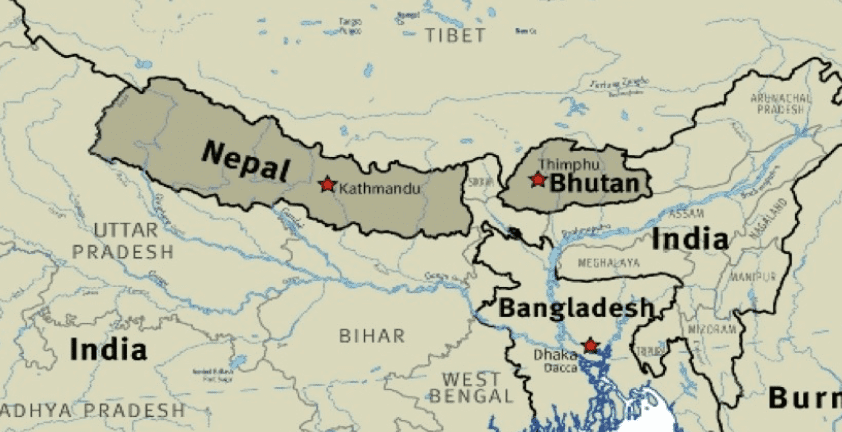
ABSTRACT On average 75 billion tons of freshwater exit from Bhutan every year. Freshwater of the Himalayas is used for domestic purposes, to irrigate fields and to generate hydroelectricity among many other uses. Bhutan is perhaps one of the few countries rich in freshwater. The per capita share of freshwater may be one of the highest in the world. A Food and Agriculture Organisation (FAO) report mentioned that Bhutan’s per capita fresh water was 108,476, 557 liters in 2014 – the fifth highest in the world. Yet, the water on each person’s share is of little use, as they don’t get to use it. The methods and policies used in the past were effective in using water. Due to a shift in peoples’ lifestyle and habits, previous system of water management is not enough to meet their future needs. In all cases, water is redirected to rivers or evaporates into atmosphere directly. Here, an academic discussion is carried out on perspective of water use in Bhutan. Keywords: erosion, fresh water, glacial lakes, hydroelectricity, irrigation, pollution Introduction The Himalayas, of which Bhutan is part of, is a natural water condenser that converts water vapor into freshwater. Two factors, high altitude and continuous mountain ranges intercepting monsoon clouds help to complete water cycle. The tall mountains not only convert clouds into water that flows downhill as streams, rivulets, and rivers but also store water in the form of ice for slow release.  Himalayan ranges within Bhutan have altitude from 97 m (318 ft) to 7,528 m (24,698 ft) above sea level. The aerial measurement is 305 km from west to east and 145 km from south to north (Dubey, 1978) with an area of 47,000 sqkm (Figure 1). However, approximately 8,500 sqkm is under stake with China and India leaving only 38,500 sqkm in government’s diplomatic references (Rizal, 2013). A report on water resources management plan by Royal Government of Bhutan (RGoB)…

ABSTRACT A breakthrough in Nepal-Bhutan relationship in the past had been rendered near impossible given the mistrust over refugee issue coupled with lack of autonomy in Thimpu vis-à-vis conduct of its foreign and defence policy. With resettlement of most Bhutanese refugees in third-countries and revision of Bhutan-India Friendship Treaty 1949, there is tremendous scope for strong bilaterally beneficial relationship now. But this will only gain meaningful traction by addressing the refugee saga in some manner. Since only a handful of refugees remain in camps now, Bhutan can offer to repatriate the remaining refugees under the same process agreed during Joint Ministerial Committee (JMC) meetings and Joint Verification Team (JVT) mechanism without any significant costs. At this stage this may symbolic at best, but will help provide a closure to all parties involved: Nepal can declare success in its bilateral diplomatic dealings; it will help Bhutan salvage its reputation in international forums while further cementing its autonomy in the conduct of its foreign policy; and this will also help close a painful chapter for thousands of Bhutanese refugees who have now become citizens of some other countries. Keywords: Bhutan; diplomacy, Nepal; refugees, relationship; Introduction There are many similarities between Nepal and Bhutan. Both countries straddle the Himalayas and are landlocked—surrounded by India and China. The two countries have huge hydropotentials and can be energy powerhouse of the region. Both the countries are members of Non-Aligned Movement (NAM) and founding members of South Asian Association for Regional Cooperation (SAARC) (Bhattarai, 2019). The two countries have joined Bay of Bengal Initiative for Multi-Sectoral Technical and Economic Cooperation (BIMSTEC) since 2004 (BIMSTEC, 2019). Historically, the two countries have been friends. Even as Nepal began experimenting democratic rule since the 1950s, it was not until early 90s that Bhutan transitioned to some semblance of democracy. Bhutan is home to a sizeable population of Nepali origin—with records of migration dating back as far back as early…

ABSTRACT Security threat posed by rising China in Indo-Pacific region has raised fear of possible shift in the world order – that had remained under tight fist of the United States for over a century. China is flexing its economic and military muscles that is likely to substitute America’s dominance in international politics. As China crawls into Asia Pacific region, the US has unveiled its new strategy to counter the rise of Communist China. Regional allies and stronger security relation are of paramount importance for this strategy to succeed. This paper examines what Indo-Pacific Strategy means for South Asia and Bhutan in particular. How this tiny Himalayan Kingdom would play its role and what are possible advantages? It also includes the role of India in courting Bhutan into the bigger international gambit to surround China and what India and US must do jointly to ensure the success of the strategies. Key words: communism, democracy, diplomacy, military, politics, strategies, Indo-pacific Introduction While unveiling Indo-Pacific Strategies in 2018, US Secretary of State Mike Pompeo said “American people and the whole world have a stake in the Indo-Pacific’s peace and prosperity. It’s why the Indo-Pacific must be free and open (Hartman, 2019).” US state department describes this statement as ‘an ironclad and enduring commitment’ (US State Department, Office of the Assistant Secretary, 2018)  to the region. The strategy basically targets creating more democratic and open society in Indo-Pacific region to counter China’s undemocratic growing influence. Bhutan is small country but can be a major player under this flagship strategy within the Indian domain. India’s involvement in engaging Bhutan on this strategic initiative of the US government is of paramount important. The initiative must not ignore the undemocratic behaviours of Bhutan government– past and present. India is not an alien when it comes to the Bhutanese refugee issue. For decades, a democratic country aligned with an absolute monarchy to curb the voice for democratic…

Dear Readers, We welcome you to the inaugural issue of The Bhutan Journal published by Bhutan Watch. The Bhutan Journal is the first attempt from Bhutanese in Diaspora to look deeper into the Bhutanese issues that are outside the four walls of everyday domain and discussion. It is our sincere effort to engage every Bhutanese into an intensive and fruitful conversation about issues affecting Bhutan and Bhutanese people. Whether inside the country or outside, contribution to Bhutan continues until the Bhutanese spirit is alive. It is our divine duty to keep this spirit alive for generations to come. As we spread across the globe, our busy schedule keeps us disconnected from Bhutan. There is an unintended disconnection between Bhutanese in Diaspora and those living in Bhutan. Bhutan Journal shall make efforts to bridge the extreme ends of the same community and to build consensus in Diaspora about our ability to contribute towards reshaping a fair and just future. The journal shall contain anything to everything about Bhutan. Articles both appreciating and critical analysis of Bhutan’s efforts on modernism, philosophies, development, political process, economy, human rights, discrimination, and current affairs are welcome. We respect constructive criticism and critical appreciation. There is no restriction on what subject you love to write if it is about Bhutan and issues are authenticated with facts and sources. We are eager to hear your comments, suggestions and feedback to improve our future publications. This Journal shall be published once a year, but our website will carry occasional papers, research reports and opinion columns. We welcome short articles/opinions for website too.  Editors