EditorialThis issue of the Bhutan Journal has focused partly on language─ the most specifically the changing needs and status of the language of the Bhutanese diaspora. When the Royal Government of Bhutan wanted to reduce its potential political opposition, one of the major criteria in its target list was Nepali language and its users. The evicted people- who were mostly of Nepalese descent- reached Nepal where they reinvigorated their skills in Nepali language and literature that had almost extinguished in Bhutan. During their migration for resettlement, for many literate people, Nepali language or literature was the only possession they carried with them. Citation: The Bhutan Watch. (2023). Editorial. The Bhutan Journal, 4(1); 1-3. Identity, Culture, and National Interest: A Pragmatic Application of Constructivist Theory to the Lhotshampa ExpulsionBy James PleaceThe Bhutanese state has constructed their identity, domestically and internationally, against the Lhotshampa people, a broadly Hindu Bhutanese-Nepali people, who feature as the ‘Other’ in the process of identity construction. This group of marginalised people has been expelled from Bhutan through ethnic cleansing. The monarchy and ruling elite see the Lhotshampa as a threat to their power and have imposed policies designed to homogenise Bhutan. We explore this Bhutanese construction of identity. Citation: Pleace, J. (2023). Identity, Culture, and National Interest: A Pragmatic Application of Constructivist Theory to the Lhotshampa Expulsion. The Bhutan Journal, 4(1); 4-23. Post-resettlement Bhutanese Poetry: A Thematic Content Analysis through Natural Language ProcessingBy Ramesh Gautam, Shiva Lal Dahal & Khem Raj GautamInterpretation of poetry is generally based on qualitative analysis of semantics, figurative language and expression, and knowledge about the author and literary elements. Recent advancements in computer-based text processing allow us to analyse a large amount of text quantitatively. This paper presents two useful aspects of literary analysis. Firstly, it interprets the social, cultural, and contemporary aspects of Bhutanese people’s lives after resettlement represented through poetry. Secondly, it presents NLP as a methodological technique in analysing…
This research attempts to explore secular aesthetics reflected in Punarwaspachhika Bhutani Nepali Kavita (Post-Resettlement Bhutanese Nepali Poems), an anthology of Nepali poems representing post-resettlement Bhutanese-Nepali literature published by Nepal Academy in 2022. Religion is still a dominant aspect of the everyday politico-cultural life. It has been more than three decades the people of Bhutan were evicted and made refugees. Majority of those are now resettled in the Global North countries. Their call for human rights, equality and democracy echoed from exile since 1990. But finding secular aesthetics in Bhutanese-Nepali literature is very rare. This qualitative research primarily explores secular aesthetics in the post-resettlement Bhutanese Nepali representative poems. The anthology Punarwaspachhika Bhutani Nepali Kavita has been assessed from the notion of hegemony and counter-hegemony. And this research analyses historicity of the selected post-resettlement Bhutanese Nepali poems with an aim how this text exists (or fails to act) in the counter-hegemonic actions. Read in full
The Bhutanese state has constructed their identity, domestically and internationally, against the Lhotshampa people, a broadly Hindu Bhutanese-Nepali people, who feature as the ‘Other’ in the process of identity construction. This group of marginalised people has been expelled from Bhutan through ethnic cleansing. The monarchy and ruling elite see the Lhotshampa as a threat to their power and have imposed policies designed to homogenise Bhutan. We explore this Bhutanese construction of identity. Through the case studies of Bhutanese-Nepalese and Bhutanese-Lhotshampa relations, we review the literature on both ‘critical’ and ‘conventional’ constructivism with focus on identity in the domestic and international spheres. The primary question of investigation is to what extent theorists can reconcile critical and conventional constructivism through the case study of Bhutanese national identity and the type of insights that gives us into the nation of Bhutan and its identity. We attempt to reconcile two complementary but ontologically differing theories through a pragmatic approach. Constructivist theorists in the realm of identity are deployed to explain how the Bhutanese government has acted. We find that through Bhutan, a pragmatic approach can be taken to partially reconcile the constructivisms to understand identity domestically and internationally. The findings suggest identity is central to Bhutan exercising its sovereignty, to the detriment of the Lhotshampa. The government claims homogeneity at home, providing a domestic base of control to pursue international interests; interests which reinforce that identity of homogeneity. Read in full
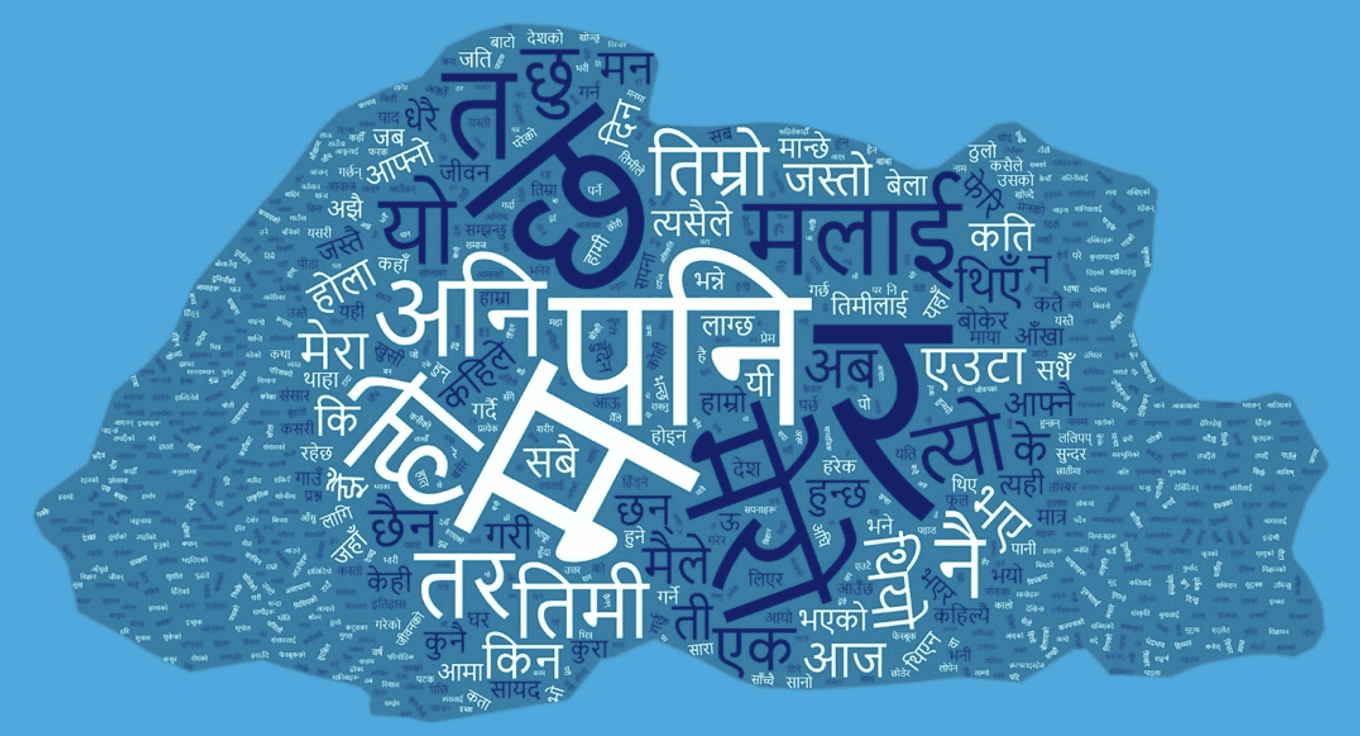
Interpretation of poetry is generally based on qualitative analysis of semantics, figurative language and expression, and knowledge about the author and literary elements. Recent advancements in computer-based text processing allow us to analyse a large amount of text quantitatively. In this study, we analyse 135 poems published in the anthology ‘Post-resettlement Bhutanese Poetry’ quantitatively using natural language processing (NLP) techniques. We analyse and interpret the words and word patterns in the anthology, classify each poem based on codes for word-use and combine assigned codes into broader themes. NLP in the Nepali language is not developed enough to classify every poem into meaningful categories; however, it can help extract meaningful insights on word-use and themes even in a complicated literary text that would not have been possible using a qualitative approach. NLP was instrumental in breaking down a large amount of text into words and subsequently categorizing the words into codes, sub-themes, and themes for further analysis. This paper presents two useful aspects of literary analysis. Firstly, it interprets the social, cultural, and contemporary aspects of Bhutanese people’s lives after resettlement represented through poetry. Secondly, it presents NLP as a methodological technique in analysing literary texts written in the Nepali language. Read in full
This issue of the Bhutan Journal has focused partly on language─ most specifically the changing needs and status of the language of the Bhutanese diaspora. When the Royal Government of Bhutan wanted to reduce its potential political opposition, one of the major criteria in its target list was Nepali language and its users. The evicted people- who were mostly of Nepalese descent- reached Nepal where they reinvigorated their skills in Nepali language and literature that had almost extinguished in Bhutan. During their migration for resettlement, for many literate people, Nepali language or literature was the only possession they carried with them. Read in full
ABSTRACT Increasing unemployment, absence of government action in job creation, small market and lack of entrepreneurial opportunities are troubling to the Bhutanese population, especially youths, in recent years. The young and educated population is looking for greener pastures overseas and economy is surprisingly becoming remittance reliant. There are multiple factors within the country that needs government attention in order to improve the employment rate for university graduates. The country has a small private sector that hardly can create any new workplaces. The biggest employer is the public sector – that too is shrinking in recent years – in response to costs cutting measures. This study focuses on the historical structure of Bhutanese job market, current trends and future prospects and what it means for the Bhutanese economy in general. Read in full
Bishwanath Chhetri (BNC) has been a leader of Bhutanese people since the conception of the Student Union of Bhutan (SUB) in 1988. He continued his activism in exile and the United States of America after the refugees were resettled in global north countries. He is actively involved in activities for preserving Bhutanese identity and history. He has inspired a generation of people with his words and actions. He is a member of the Governor’s Advisory Commission on Asian Pacific American Affairs in Pennsylvania. Govinda Rizal of The Bhutan Journal (TBJ) approached Chhetri for a written conversation. Read in full