CALL FOR SUBMISSION
The Editors and Publisher of the Bhutan Journal are now inviting submissions from writers, to be published in January 2021 (Issue 2). For consideration for inclusion in the journal, authors are requested to submit their papers before on or before 30 October 2020.
The submissions will be limited to a minimum of 3,000 words and maximum of 5,000 words, double spaced, in Calibri font, 12pt, word format. Any references must be in APA system.
The Editors and Publisher encourage authors to submit original papers on issues related to Bhutan and Bhutanese Diaspora. Research-based submission will be given priority against opinions and personal views.
Bhutan Journal is published by Bhutan Watch. Bhutan Watch is a non-profit and non-partition think tank established to advance and spread conscience on importance of proper and successful democratic transition in Bhutan, to research, contribute to the strengthening of civil society and democratisation in general and continuously monitor that civil rights of the Bhutanese citizens are protected, safeguarded and promoted.
Authors who have questions about the appropriateness of their submission are encouraged to contact the Journal at bhutanwatchresearch@gmail.com.
Ram Karki | Karma Duptho | Dr Govinda Rizal
Coordinator-|- Administrator – | – Editor
Bhutan confronts China
By I P Adhikari
Bhutan and China have landed into fresh border dispute – this time quietly in an international forum, details of which have started coming out only recently, bit by bit. The Bhutan-China border dispute has emerged amidst the heightened tension along Indo-China border. Bhutan has softly confronted with China this time when the claim never raised in border talks was made.
Bhutan may be angry at Chinese approach but have no strength for public verbal exchange with the northern neighbour. The borders are sensitive, Indian assistance are not guaranteed in case of full-blown war. This would put pressure on Bhutan to have softer approach with China even the anger is boiling. Bhutan also understands the its strategic location in geo-politics and any confrontation between China and India will have direct impact on life in Bhutan.
Wamrong case: a litmus test for Bhutanese judiciary
By I P Adhikari
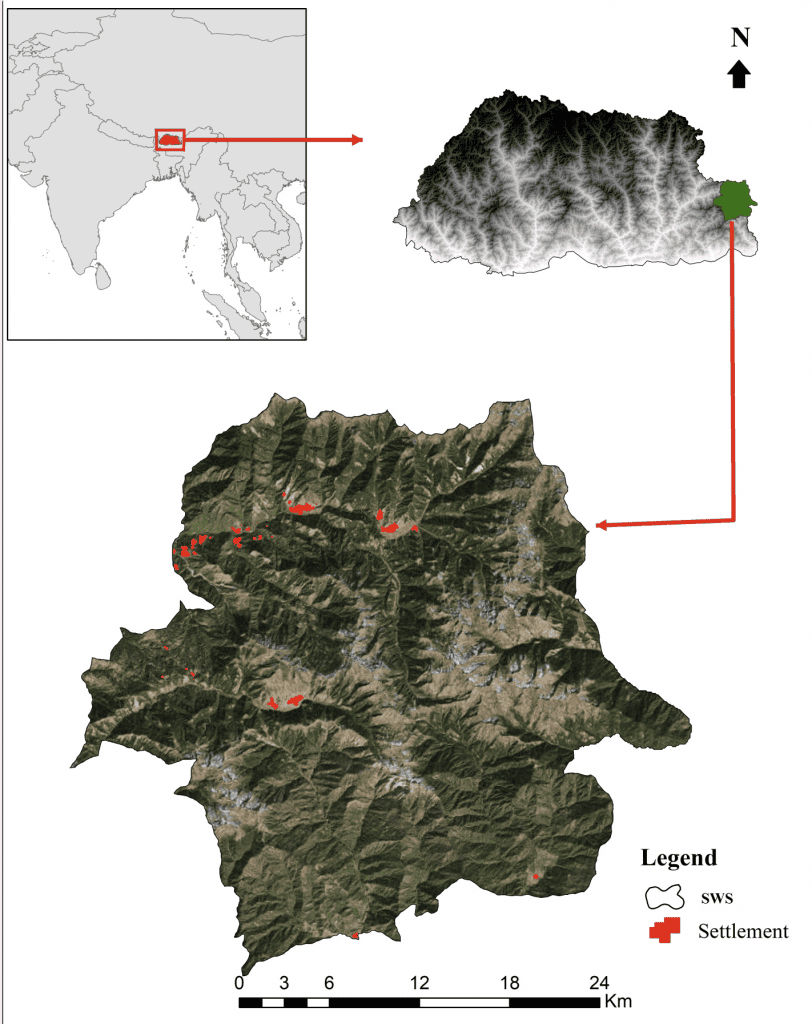
Incompetency of justice delivery will gradually erode public trust on judiciary. Bhutanese is moving on this path. Public feel that fight between those in power and not result in powerless losing any legal battle. Until this culture changes, questions are raised against the Bhutanese judiciary. Bhutan must raise the bar of ethical behaviour among its legal practitioner. And, the country has the challenge to ensure its citizens get enough legal representation in court – not just a few influential individuals – by increasing the number of public lawyers available to individuals like Peldon.
Faltering
While Bhutan has made progress towards harmonising legal provisions and practice in protecting rights of its citizens, there are several fronts that Bhutan must move swiftly to adhere with international standard. Protecting human rights is state’s obligation. Ensuring human rights not only enlivens the lives of citizens but also helps strengthen democratic culture and political plurality.
The government cannot reject UN’s call for a national institution to work on human rights protection and act as principal agency when citizens have grievances of their rights being violated. If Bhutan cites technical and financial unpreparedness at this stage to constitute such institution, it has the obligation to let citizen set up their own human rights monitoring agency. Since there has not been any efforts from either the government or the citizens to monitor human rights situation, many cases of human rights violations go unheard. This essentially leads to government’s failure to fully protect the rights of its citizens enshrined by the country’s constitution.
Note: The report covers incidents between 1 Jan 2019 and 31 Dec 2019. Media monitoring is included within this report and there will be no separate report this year focusing entirely on media.
Read Other Reports Here
Human Rights Report 2018 | Press Freedom Rights Report 2019
Other Featured Stories

Nepali Buddhism Enters Bhutan
By Dr Govinda Rizal
The Nepali version of Buddhism is penetrating into Bhutan in an apparent effort of the Bhutanese government to tighten grip on Hindus and to ward off the growing influence of India based Vishwa Hindu Federation. The RGoB must have cracked an idea that the Hindus of Bhutan of Nepalese descent can be converted to Buddhism if the Nepali Buddhism is enforced on them.

Fragmented Happiness
By I P Adhikari
Bhutan has emerged well as a promoter of happiness parameter to measure the status of social wellbeing. It received world appreciation. However, the country failed to ensure that the principle becomes part of the Bhutanese society. Bhutan talked much of happiness, implemented less of it. The last few UN happiness reports say all about this. It is prime time Bhutan walks the talk.
Sarpang V Zhemgang
By I P Adhikari
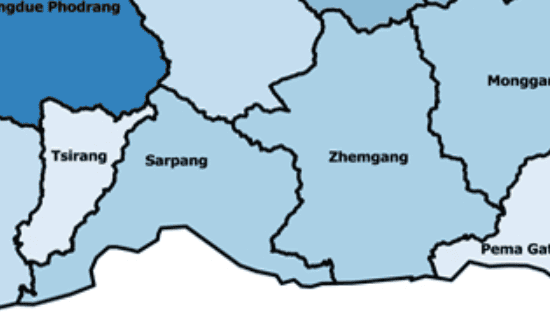
An in-depth analysis of political fight in Bhutan between government and opposition party over where the flagship tourism programme should be run – in Sarpang and Zhemgang districts. The case of the issue is just as simple – why Sarpang district replaced Zhemgang. Was it legal? Was it unconstitutional? Was that politically motivated? And what is the solution.
Mission, Vision and Objectives
Read here the complete mission, vision and objectives of the Bhutan Watch – a think tank from the Bhutanese Diaspora.