Critical Appreciation – Constructive Criticism

Photo source: Public Information Bureau, GOI

Bhutan-India relations are shaped by the changing geopolitical need and conflicting security arrangements in the Himalayas. The countries call it ‘warm relations’ which are rather defined by the changing political interest of the stronger neighbour – India. This article shall look into the geopolitical shift in the Himalayan belt, its influence in Bhutan and tuning of the Bhutanese security policies to suit the need of the hour. It shall also examine the reasons for shift in those security policies at different time periods. Read full

ABSTRACT Increasing unemployment, absence of government action in job creation, small market and lack of entrepreneurial opportunities are troubling to the Bhutanese population, especially youths, in recent years. The young and educated population is looking for greener pastures overseas and economy is surprisingly becoming remittance reliant. There are multiple factors within the country that needs government attention in order to improve the employment rate for university graduates. The country has a small private sector that hardly can create any new workplaces. The biggest employer is the public sector – that too is shrinking in recent years – in response to costs cutting measures. This study focuses on the historical structure of Bhutanese job market, current trends and future prospects and what it means for the Bhutanese economy in general.  Read in full

Bhutan is graduating from Least Developing Country (LDC) status in 2023. It was granted LDC status in 1971. Bhutan has maintained fair political stability, consistent economic growth, and improved social indicators in the last few decades. However, Bhutan’s graduation comes amid the worst economic blow by the COVID-19 pandemic. The pillars of growth have been shattered but the plan for graduation is unlikely to be extended. Bhutan has not met a few criteria under the Economic Vulnerability Index (EVI) while it has fulfilled other criteria. The graduation is expected to cause no major impact on Bhutan due to its economic reliance (in both grants and trade) on a single country (India). Bhutan has low volume trade with third countries. Yet a sensible amount of grants, funds and market access will be lost that may challenge Bhutan’s continued economic growth and economic prosperity. This article investigates the process, progress, and challenges of the country after it attains the status of a developing nation. Read full

Introduction In a new ‘democratic’ Bhutan, a lady’s failed attempt to overthrow the army chief and influence the highest authority in the county’s legal system raised questions if the country has the capacity to deter future conspiracies that could be complicated and sophisticated than this. The story received massive public attention and stirred inconclusive debates purely because the country has liberalised politics and media industry, though in miniature form, exist. Many stories of this nature vanished in history and have become folklores.  The latest scandal would have much bigger implications in public psychology had it been not shadowed by the COVID 19 pandemic. The story revolves around four individuals – Bomden Khandu Wangmo, former Royal Bodyguard (RBG) Commandant Brigadier Thinley Tobgay, Supreme Court Justice Kuenlay Tshering (Elephant Bench or Bench 1) and Pemagatshel District Judge Yeshey Dorji. The Thimphu District Court on 23 July sentenced these four individuals to a prison term ranging from five years to 10 years. Chief Operations Officer Batoo Tshering with RBG Commandment Thinley Tobgay The charge sheet of the Office of Attorney General (OAG) mentions, ‘as the offenses committed by the defendants are highly sensitive, grievous, most serious in nature and detrimental to the very core of national security, peace and sovereignty of the country, they must be given the maximum sentencing’. Though total sentences pronounced against them are much longer, the court agreed for concurrent sentences and some of them can pay Thrimthue[1] in lieu of imprisonment for certain offences and charges. Lead Lady The story revolves around Khandu Wangmo – a lady who whirled power in disguise in such a sophisticated way that caused a major stir in the national security and judiciary. Wangmo, 41, from Thimphu, started her career as an English teacher in Drukgyel School in Paro but left the profession early on. She worked in the Indian Embassy in Thimphu as a Social Secretary cum Liaison Officer between 2012 and 2016.…

A Bhutanese guard frisks voters at a polling station in Phuentisiling constituency, some 45 Kms from the Indo-Bhutan border, 31 December 2007. The isolated Himalayan kingdom of Bhutan held its first parliamentary elections aimed at transforming the country from absolute monarchy to constitutional democracy. "Polling has begun in 15 districts with the response quite enthusiastic. This is a historic moment for all of us," Bhutan's chief election commissioner, Dasho Kunzang Wangdi, said by telephone from the capital Thimphu. AFP PHOTO/Diptendu DUTTA (Photo credit should read DIPTENDU DUTTA/AFP/Getty Images)

ABSTRACT  Bhutan is now a democracy. This new democracy promotes adult franchise. It conducts periodic elections and has elected members in parliament and government. It has political parties contesting elections. Despite these basics of democracy, the country lacks accountability mechanisms, participatory channels, independent and active civil societies, education about democracy, and a monitoring system that are central to a functional democracy. Citizen-government continues to remain concerning factors in institutionalising democracy in Bhutan. Drawing from regional experiences, Bhutan poised to have a bumpy ride on democracy. The issue of human rights and social justice would be a far cry. This paper discusses the parameters of democracy and public participation in Bhutan and the future of Bhutanese democracy.  Keywords: Democracy, election, participation, people, political parties,  adult franchise, human rights  Read Complete Article

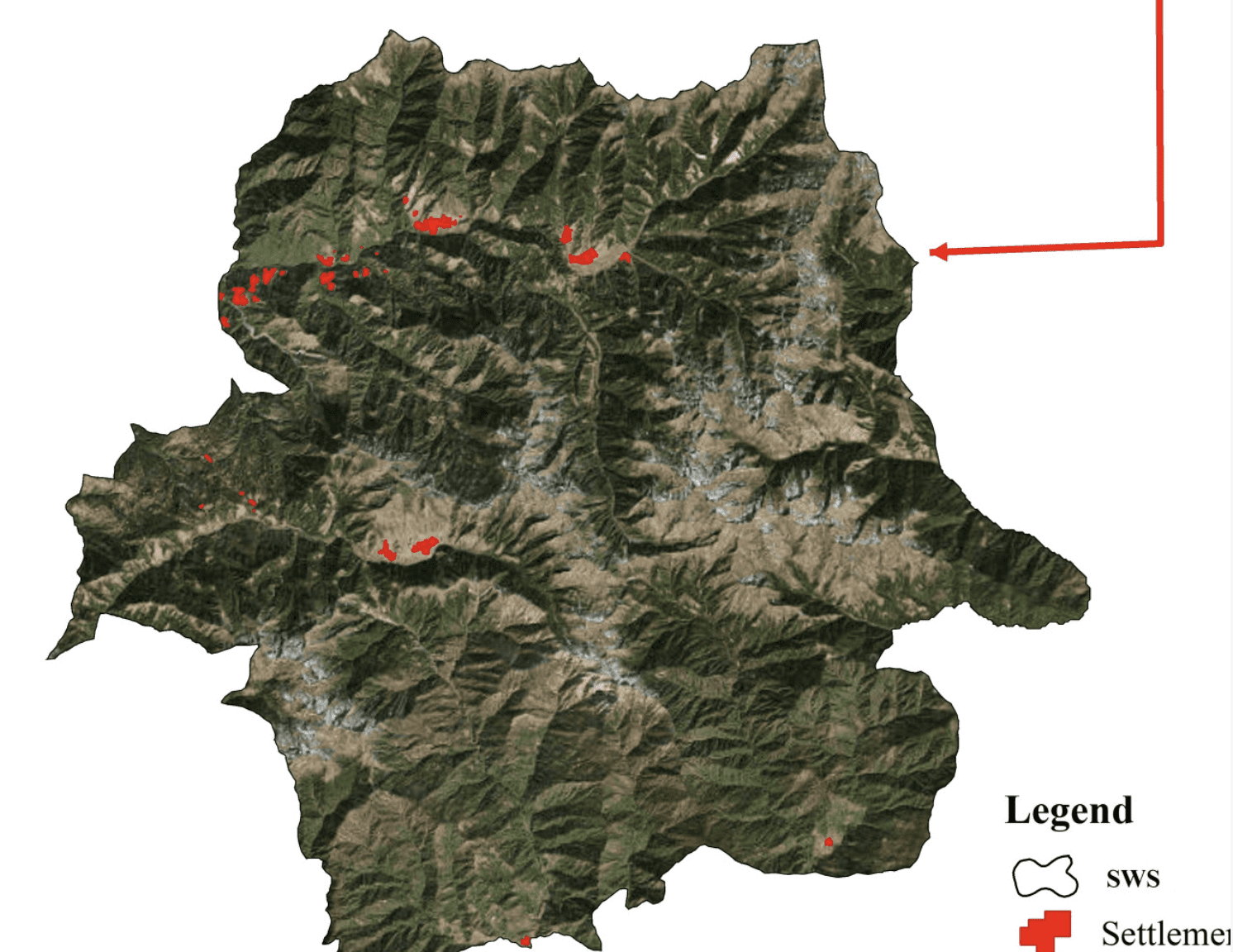
Bhutan and China have landed into fresh border dispute – this time quietly in an international forum, details of which have started coming out only recently, bit by bit. Indian media have been quick to pick the issue articulating this to be another indirect pressure on India. The Bhutan-China border dispute has emerged amidst the heightened tension along Indo-China border. Context UN’s Global Environment Facility had its virtual meeting in the beginning of last month to approve several grants related to climate change and environmental preservation. The GEF Council discussed and approved USD 5.4m grant application put forth by Bhutan for biodiversity in Sakteng Wildlife Sanctuary in the eastern district of Trashigang. China opposed the proposal and did not join the council decision. China claimed that Sakteng was a disputed border region and as such funding should not be approved. Despite China’s objection Bhutan secured the grant funding.  Sakteng Wildlife Sanctuary The GEF had allocated funds for this sanctuary in the past but China had never raised any objection or mentioned it to be an area of border dispute.  Bhutan for the first time went hard against Chinese assertion. Despite ceding a large area in the Gasa district to China, the northern communist nation did not stop border encroachment. Failing to see any intention of the communist regime in resolving the disputes, Bhutan technically started ignoring border talks. When this latest episode hit Bhutan in an international forum, the Himalayan nation formally dispatched demarche to Chinese embassy in New Delhi to express its objection on new Chinese stance.  Without formal diplomatic relations, China and Bhutan communicate through their embassies based in New Delhi. Bhutanese objection The diplomatic note is not publicly available, yet Indian media quote sources saying Bhutan objected China’s position and clarified Sakteng Wildlife Sanctuary is an integral and sovereign territory of Bhutan. According to the GEF Council Chairman’s summary released on June 16, of the virtual meeting…

You cannot question the authority for its actions. This was the primary principle of governance in Bhutan for centuries. Post ‘guided democratic’ changes, little has changed to diffuse the perception among the elite members of Bhutanese community that it is a void in democracy.  Misuse of authority and privilege for abuse and personal gain is a culture in Bhutan. Only a handful of cases appear in the public domain whereas vast majority are socially and economically silenced. The incident that come in the public domain also fail to hold its presence or leave a mark in absence of conscious civil society, strong media and awaken citizens. The last instance of such event is from eastern district – wife of a judge in a subdivisional court abusing and assaulting her neighbour for reasons not known. The incident happened in the last week of April but came into limelight almost a month later. During this period, the victim was reportedly given pressure for compromise to settle the case outside the court and police. It is a traditional practice in Bhutan to settle cases outside courts or tribunals. In many cases, courts too encourage such practice obliquing its obligation of giving a verdict when case is registered for judicial proceedings. The Wamrong case drew public attention, increasing criticism of the judicial system, justice delivery, police behaviour and social hierarchy that is fuelling abuses and prejudices based on social status of an individual. The general sentiment that justice delivery is biased is ever increasing. The incident The case involved Tshering Yangki, 52, wife of a judge in Wamrong sub-divisional court under Trashigang district, who assaulted her neighbour Sonam Peldon, 38. Peldon’s husband works as sweeper in the Wamrong court. Yangki verbally attacked Peldon the moment she spotted her in the kitchen garden and demanded that she remain out of her sight. Media reports quote Peldon saying, “I did not say anything and instead stood…

ABSTRACT The Himalayas is a serious victim of climate change. Consequences of the change will be the hardest for the people  there. Residents in  downstream will be no less affected. Melting ice and decreasing ice reserves indicate a disastrous future for those who rely on the Himalayas for water sources. The Himalayas are source of life for millions. Impacts are already visible in the form of flash floods, GLOF and unpredictable monsoon. Results are declining agricultural production, scarcity of water resources and deterioration of human health. Growing vehicular pollution, tourism and mega hydropower dams are some of the internal factors raising alarms in the Himalayas. Moreover, human activities in the vicinity of Bhutan not within its control are bigger influencers of climate changes. Keywords: Carbon, climate change, glaciers, health, Himalayas rainfall, water, flood Introduction Bhutan sits on the southern slope of the Himalayas that is known for serene natural environment and pure air quality. The northern region of Bhutan is covered by snow throughout the year while its southern part is used for human settlement. Southern belt is  suitable for agriculture and is the food basket of the country. Hilly region has sparse settlement except for the valleys. The capital Thimphu  houses the largest congregation of population. Southern belt with tropical climate is home for a large population. Quick changes in altitude and monsoon from the Bay of Bengal influence climatic conditions in Bhutan. Temperatures in Himalayan foothills of the southern belt ranges between 15-30 degree Celsius (59-86-degree Fahrenheit). The Inner Himalayas in central region has warm summers and cool and dry winters. This region has temperate and deciduous forests and fruit trees. Greater Himalayas in the far north is extremely cold and is mostly without vegetation. Climate change Climate change has become a cliché of our generation. The phenomenon is impacting not just a country but the whole human civilisation. Governments and authorities lack adequate commitments and resources to…

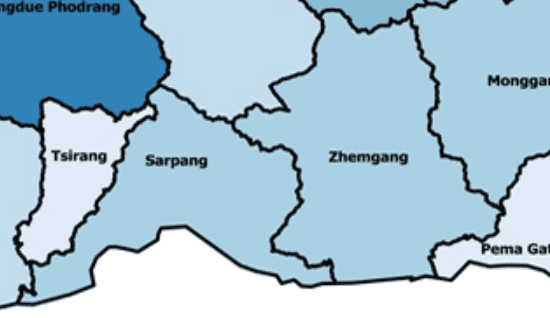
Sarpang and Zhemgang districts have become the hotspot of political wrangling in Bhutan for over a month. The iron is still hot and none of the parties are willing to back off from their allegations against the other. The race is unlikely to settle soon, if no royal intervention made. However, royal intervention will be unconstitutional though softer approach is not unanticipated. Cause The battle begun with government’s decision to remove Zhemgang district from national tourism flagship programme and replace it with Sarpang. The government proposal passed the parliament for Nu 200 million worth of tourism programmes for the fiscal year 2019-20 out of the Nu 1 billion in the 12th Plan where Zhemgang was supposed to be the beneficiary, not Sarpang. The idea to include southern district in the flagship programme and open southern doors for tourists was initially presented by the opposition party – Druk Phuensum Tshogpa (DPT). The government resisted the idea saying Bhutan does not have appropriate and adequate infrastructure for border security to run such programme. Upon opposition’s pressure, government agreed to open entry points in southern districts. Initially government proposed for Dagana, Gasa, Lhuentse and Zhemgang.  The districts were means to have regional balance. Dagana representing southern region, Gasa the western, Lhuentse the central and Zhemgang eastern region. With Zhemgang being replaced by Sarpang, the eastern region has now been left out with the programme. Allegations Opposition party DPT alleged that government deprived the district of national programme because the district voters did not choose Druk Nyamrup Tshogpa (DNT) in last election. Zhemgang’s both representatives in the National Assembly are from the opposition party – DPT. The Opposition approached the Speaker of National Assembly to revoke the government decision. However, speaker opined that government has the authority to make changes in the budget appropriation and alter programmes as needed. The Office of Attorney General – the legal advisor to the government – also favoured government’s…

Introduction Bhutan has emerged well as a promoter of happiness parameter to measure the status of social wellbeing. However, the country failed to ensure that the principle becomes part of the Bhutanese society. Bhutan talked much of happiness, implemented less of it. Bhutanese, in all, failed to feel they are happy. Bhutan King’s ingenious idea of Gross National Happiness over Gross Domestic Product to measure development has stoked interests among many western scholars, governments and students. The fact is that the idea of happiness had evolved well before the enthronement of the King Jigme Singye Wangchuk in Europe and entered Bhutan in late 1990s. What Bhutan did is just coining a new term for it – Gross National Happiness. Early philosophers have extensively discussed the need of happiness as essential part of the in human existence. The ideal concept lost its track with growing influences of consumerism that sought happiness in material possession than on solace of inner self. Yet, search for happiness had not ended up all. Today, this has come up as an idea of fusion between positive psychology and economics. You must be mentally sound and economically well to live a happy life. Certainly the pursuit of happiness is not a new concept. The American Declaration of Independence eloquently makes a passing reference to it as the right of human to life, liberty and pursuit of happiness. Nevertheless economists have shied away from pursuing the path of happiness for long claiming that there is no scientific basis to measure happiness. But things seem to be changing. Happiness in Buddhist, Hindu and Stoic sense points towards detachment and comes from within, not outside and this makes amuses among the western scholars. From that point of view, certainly the material development becomes pointless and of no consequence to actual happiness. Tibet, Nepal and Bhutan make up most of the Himalayan range and were seen as the exotic place. The…