Critical Appreciation – Constructive Criticism

Photo: Kuensel

Ram Karki & Awatif Laouedj Introduction  On 30 April 2021, the Japanese government announced to award Dago Tshering with the Order of the Rising Sun, Gold and Silver Star to strengthen the relationship between Bhutan and Japan (Mishra, 2021). Dago Tshering, former Bhutanese Ambassador to Japan, was recognised for his services to enhancing the partnership and friendship between Japan and Bhutan. This was the first time the honour had been bestowed by the Japanese government to a Bhutanese citizen. From 1991 until 1998, he was both Minister of Home Affairs and Commissioner of Cultural Affairs (Mishra, 2021). During his tenure, human rights violations took place against the Lhotsampa community, who were victims of ethnic cleansing (Bhattacharyya, 2017). This announcement has dismayed the crime victims, who are now protesting the decision. In the wake of this, considerable attention has been paid to the human rights violations of 1990-1993 under Tshering’s tenure (Bhutan News Service, 2021). Because of Drukpa’s cultural hegemony in Bhutan, the Lhotsampa, originating from Nepal, were made to follow Drukpa’s rules and standards. The Lhotsampa’s Hindu way of life was in stark contrast to these limitations (Bhattacharyya, 2017). In the late 1980s, Bhutanese elites perceived the growing ethnic Lhotsampa group as a demographic and cultural threat. The government enacted discriminatory citizenship laws that disproportionately affected the Lhotsampa community (Human Rights Watch, 2008). Lhotsampa’s were subjected to harrowing atrocities because they were Hindus in a mostly Buddhist society (Bhattacharyya, 2017) and this made them victims of a deliberate cultural and ethnic cleansing. Due to a new Act’s need for proof of residence, the Lhotsampas were labelled as illegal immigrants. From attacks on their dress code, language, and bank accounts to the most severe types of sexual molestation and torture, they were subjected to a barrage of assaults that forced the Lhotsampas to flee Bhutan (Pulla, 2016). About 108,000 Lhotsampas ejected from Bhutan by force were upset at the dismal state…
Much has been studied and written on Gross National Happiness (GNH) and Bhutanese Refugee Issue in the past decades, but scholars and researchers are yet to write on the issue of statelessness among the former Bhutanese Citizens. In this article, I have attempted to study and analyze this issue to find the root cause of Bhutanese Citizens becoming stateless in their own country and in the diaspora. An attempt has been made to find the suitable answer of how a country that propagates the philosophy of happiness could revoke the citizenship of its people and escape from crime. This paper mainly focuses on the issue of statelessness among the former Bhutanese Refugees in their country of resettlement and studies the activities of respective community organizations to make the issue public for its resolution. The phenomenological approach was followed to write this article.  Read full

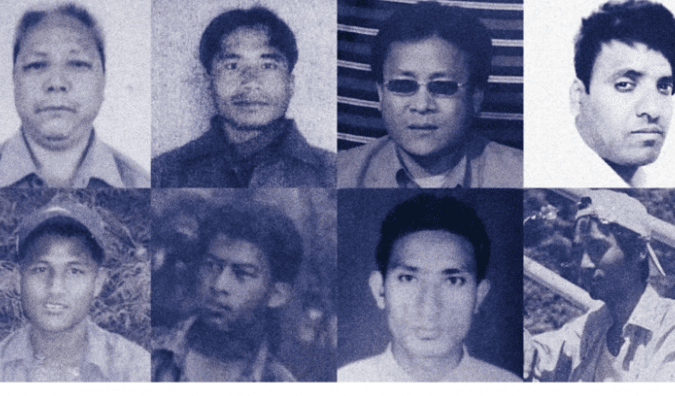
ABSTRACT  The uprising of 1990 in Bhutan was a wake-up call for the Bhutanese monarchy to reform. The King announced in 2005 that the country will have a ‘democratic’ government. He handed over his authority to his son to govern. The King and the country received a massive appreciation for initiating democracy. By nature, democracy should primarily benefit those who demanded it. Instead, Bhutan is the only democracy in the world where pro-democracy activists are still serving jail sentences. The international community remains a mute spectator to the sugar-coated Bhutanese democracy. Bhutan fooled them by taking advantage of their interest in geopolitics.   This paper shall look at the story of dissidents behind bars, their families and response from the international community – including governments, human rights groups and the United Nations. Additionally, the major highlights of this paper will be to examine the implementation of fundamental rights guaranteed by the constitution of Bhutan and to see if such fundamental rights as enshrined in the constitution are real or a toothless instrument.   Keywords: political prisoners, democracy, human rights, politics, justice,   Read Complete Article

ABSTRACT Bhutan is no exception when it comes to effect of globalisation and its tight measures to avoid the wind of globalisation, liberalisation and privatisation will bound to fail sooner if not later. Internet and social media have already been playing their influential role in connecting both former and present Bhutanese citizens. Thus, it is best the Royal Government of Bhutan initiates a friendly policy towards its evicted former citizens whose citizenship of developed countries together with their growing economic prosperity could play a vital role towards promoting Bhutan’s economy and image worldwide. This article will try to help open the eyes of Royal Government of Bhutan and its policy makers on issues affecting the country and their possible solution. Keywords: Bhutanese Diaspora, democracy, human rights, Lhotsampa, refugees, southern Bhutan, statelessness, Introduction The change in monarch has brought some relief to southern Bhutan that has remained on security radar of the government ever since they staged for democratic change in the country in early 1990s. Stories of those evicted were horrible but those who remained in service of the nation did not have good days either. Southern Bhutanese have started seeking some fundamental changes in the way they are being treated since the reign was taken over by new king in 2008.  ‘The present King of Bhutan His Majesty Jigme Khesar Namgyel Wangchuck has been doing wonderfully well for the welfare of southern Bhutanese community in every field,’ said one of my Facebook friends from Thimphu on condition of anonymity. He cited the instance of Devi Panchayan Mandir at Kuenselphodrang – built and inaugurated 1 October 2019 under the direct purview of the king on . Hindu Dharma Samudhaya of Bhutan (HDSB), a religious body formed to promote and preserve Hindu Dharma in Bhutan, had proposed construction of the temple that resembled a Buddhist monastery. HSBD’s intention to please the king was turned down and an Indian company was hired…