Critical Appreciation – Constructive Criticism

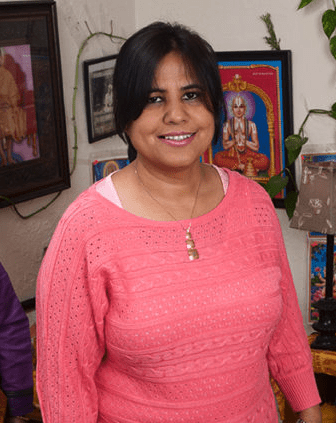
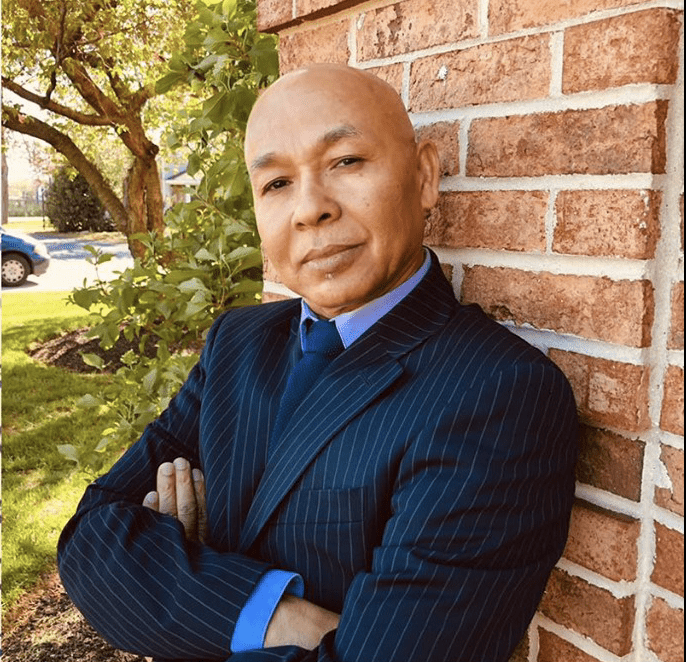
Hari Bangaley Adhikari is based in Cincinnati, OH. He was resettled from Bhutanese refugee camp as part of the third country resettlement of the Bhutanese refugees. He lived in exile in Nepal for 18 years, during which he championed political and social activism overcoming the uncertainty, deprivation and psychological troll that define life as a refugee. Adhikari continues his advocacy for justice, recognition, and historical accountability post his resettlement in the US. Read Full

Bhutan is undergoing significant socio-political and economic changes, with progress in areas like democratic governance, child welfare, and environmental sustainability. However, challenges persist. Restrictions on opposition parties, minority rights, and media censorship raise concerns about political participation. Press freedom is declining due to editorial interference and government advertising censorship, impacting media independence. Ethnic minorities, particularly Nepali-speaking Bhutanese, face systemic discrimination, including barriers to citizenship and limited access to basic services. Out-migration rates are rising due to economic instability, while domestic job security and wage disparities remain unresolved. Despite CEDAW ratification, gender inequality persists, with women underrepresented in leadership roles and facing economic barriers. Child welfare shows improvements, but issues like violence, substance abuse, and inconsistent enforcement of child labour protections remain significant, particularly in rural areas. Environmental sustainability faces challenges such as water shortages and climate impacts on natural resources. Bhutan is implementing projects like ACREWAS to address these issues. At its Universal Periodic Review at the United Nations Human Rights Council, Bhutan reaffirmed its commitment to human rights and sought international support to implement reforms addressing legal, gender, and environmental challenges. Read Full Report here
The relationship between Gelephu and the Bhutanese in exile, particularly the Nepali speaking community, is a complex narrative shaped by socio-political movements, demographic shifts, and state policies. This paper examines key historical events, including the political awakening in 1950, 1990s, the king’s visits and assurances, the mass exodus of Nepalis, and the subsequent resettlement of northern Bhutanese in Gelephu. Through an analysis of these events, this study highlights the enduring emotional and cultural ties between Gelephu and the exiled Bhutanese, as well as the broader implications for identity, citizenship, and national unity in Bhutan. Read full

As the third largest city  in Bhutan, Gelephu has the fastest growing population, which would be accelerated with the proposed Gelephu Special Administrative Region (GeSAR). However, there are restrictions already in place for land transactions in the district and people from the region are forced to seek land substitutions in other districts to make way for the city. Many of the demographic indicators of Gelephu are better compared to other districts in the country. This chapter   examines the demographic indicators of the Sarpang district, within which the Gelephu Mindfulness City (GMC) is located, and do their comparative study. Read full

Gelephu and its residents have an enduring capacity to adapt and respond to change when new factors/influences are introduced, while simultaneously preserving that which promotes unique aspects of culture and religion. This kind of adaptability supports the ambitions of the GMC. This study examines the pre-Gelephu culture, the impact of Nepali culture, the emergence of Hinduism, Buddhism, and Christianity, and the role of religious artifacts, festivals, and traditions in shaping the region’s cultural heritage. It also looks at the futuristic view of the cultural diversity if the GMC vision is realised in its entirety. Read full

This research attempts to explore the existence of Bhutanese women in public spheres in exile. Bhutanese refugees- their (hi)stories about the resistance and existence. It blends with personal narratives, introduces instances of representative Bhutanese women who have marked traces in the resistance history. It also talks about women who exist outside the bourgeois public sphere via their case. Theoretical insights from Nancy Fraser have been used, who proposes subaltern public spheres instead of singular bourgeois public sphere. Presenting available foundations and insights, this paper posits possible ways to articulate plural public spheres for the Bhutanese women in exile. Read full

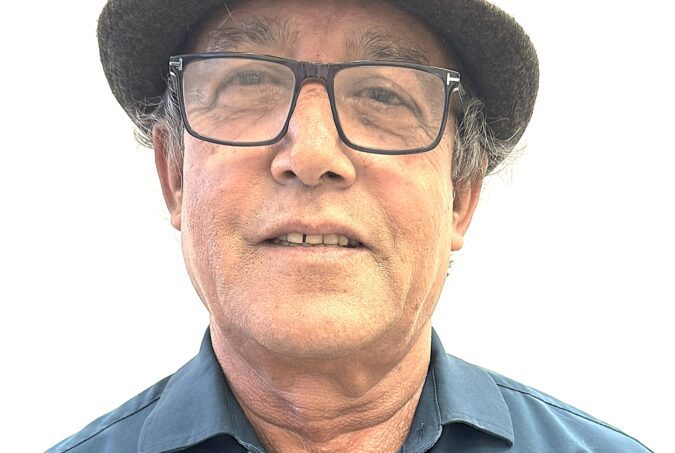
Deo Narayan Sharma (DNS) Dhakal is one of the few first-generation leaders of Bhutanese refugees who is still actively advocating for human rights, democracy, and amicable solutions for the Bhutanese people in exile and diaspora. He has authored many research articles and books delving into both professional subjects and issues about Bhutan and its people. His recent book, “Bhutan: Memoir of Refugee Struggle and Suggestions for an Amicable Resolution,” is possibly the largest book on Bhutan published by the Bhutanese diaspora. Read full

Bhutan Human Rights Report 2022

The democratic changes ushered by the royals allowing political parties to participate in the democratic process and represent the will of the people through periodic elections have hardly made any, if any, changes to the life of ordinary citizens. The king is exercising more power than before to swirl the parties to his whims and anyone questioning his whims is eliminated. As the fourth periodic election is near, there’s a likelihood of one of the oldest parties in the parliament Druk Phuensum Tshogpa (DPT) getting eliminated. This has been the attempt of the palace since 2013. Many leaders who contested previous elections under the DPT banner are encouraged to create a new party. The new party is focusing its attention on eastern districts where DPT has made its stronghold since its inception. Over three dozen political activists, who were arrested for demanding democratic changes, are still in jail on charges of treason. The incarceration of democracy fighters in jail is ironically teasing the Bhutanese democracy and its purity. Sexual abuse of women and girls had been a major issue in the last few years with the government failing to act. However, the issue is sometimes used as a weapon to victimise others – a special case on this issue is highlighted on this report. The government is limiting the freedom of information, not only by a new law but also by creating a veil in the government system that restricts the flow of information. Journalists do not get access to government information and government officials speaking to the media are terminated from their jobs. Journalists’ professional bodies raised concerns about the lack of access to information, however, were met with no response from the government. The parliament has passed a law giving both royal projects – Desuung and Gyalsung – legal status. This, however, is outside of the purview of an elected government and the king has been granted full…

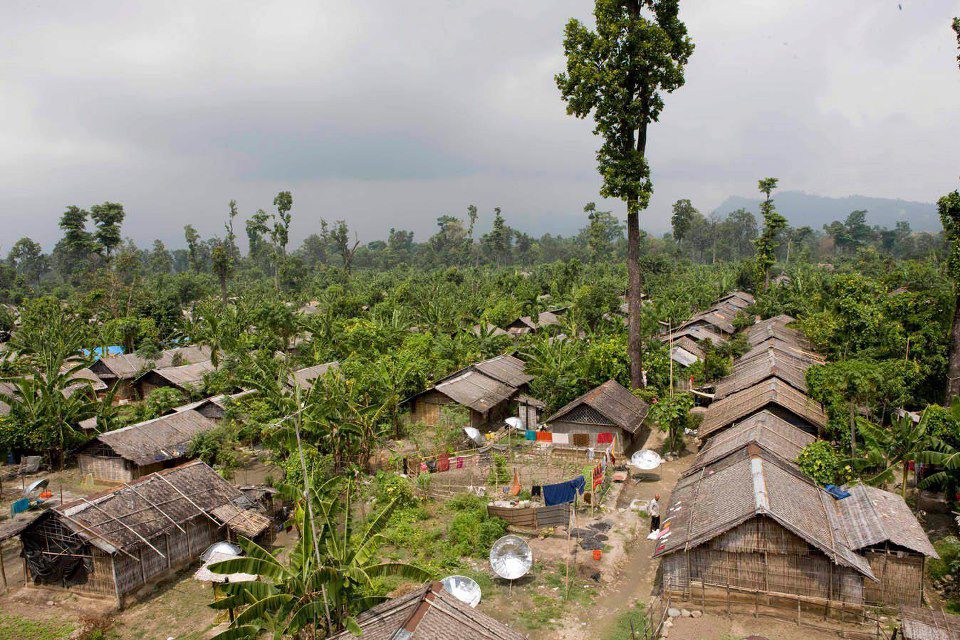
Bhutanese refugee camp

The Bhutanese state has constructed their identity, domestically and internationally, against the Lhotshampa people, a broadly Hindu Bhutanese-Nepali people, who feature as the ‘Other’ in the process of identity construction. This group of marginalised people has been expelled from Bhutan through ethnic cleansing. The monarchy and ruling elite see the Lhotshampa as a threat to their power and have imposed policies designed to homogenise Bhutan. We explore this Bhutanese construction of identity. Through the case studies of Bhutanese-Nepalese and Bhutanese-Lhotshampa relations, we review the literature on both ‘critical’ and ‘conventional’ constructivism with focus on identity in the domestic and international spheres. The primary question of investigation is to what extent theorists can reconcile critical and conventional constructivism through the case study of Bhutanese national identity and the type of insights that gives us into the nation of Bhutan and its identity. We attempt to reconcile two complementary but ontologically differing theories through a pragmatic approach. Constructivist theorists in the realm of identity are deployed to explain how the Bhutanese government has acted. We find that through Bhutan, a pragmatic approach can be taken to partially reconcile the constructivisms to understand identity domestically and internationally. The findings suggest identity is central to Bhutan exercising its sovereignty, to the detriment of the Lhotshampa. The government claims homogeneity at home, providing a domestic base of control to pursue international interests; interests which reinforce that identity of homogeneity.  Read in full

Bishwanath Chhetri

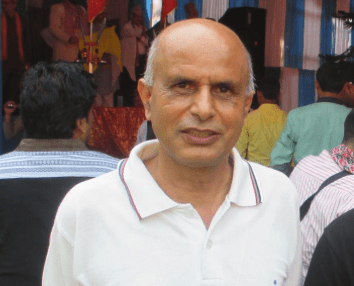
Bishwanath Chhetri (BNC) has been a leader of Bhutanese people since the conception of the Student Union of Bhutan (SUB) in 1988. He continued his activism in exile and the United States of America after the refugees were resettled in global north countries. He is actively involved in activities for preserving Bhutanese identity and history. He has inspired a generation of people with his words and actions. He is a member of the Governor’s Advisory Commission on Asian Pacific American Affairs in Pennsylvania. Govinda Rizal of The Bhutan Journal (TBJ) approached Chhetri for a written conversation. Read in full