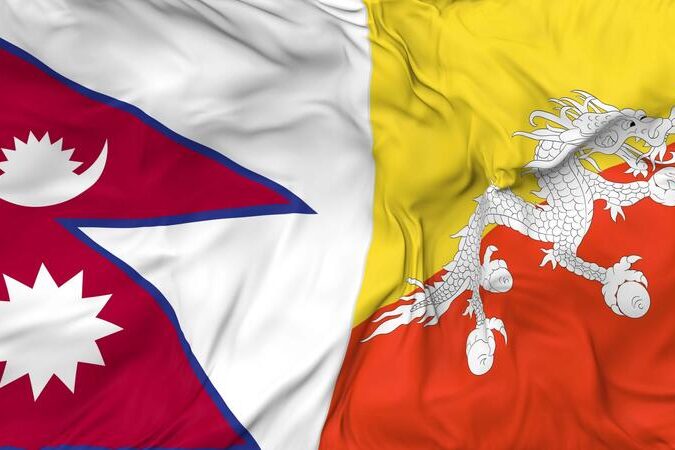
Bhutan and Nepal share similar geographical complexities, population dynamics, religious heterogeneity, cultural beliefs, and global challenges. They are compared here for being the neighbors with the same neighbors, and similar challenges. Bilateral relationships date back to ancient days and written records are available after the 8th Century AD when Guru Padmasambhava visited Bhutan and Nepal and connected the two countries with religion and migration of people. Read Full
Globally, interim governments function as transitional entities managing governance during crises or regime transitions, facilitating the shift towards a stable governance structure. Their roles include supervising elections, maintaining law and order, addressing immediate socio-political challenges, fostering reconciliation, and upholding democratic values. In Bhutan, these bodies rectify political deviations, reconnect to autocratic governance norms, and transition selective authority to the succeeding government. During this transition phase, the interim governments orchestrate conditions conducive to a particular party’s success in the later election, thus influencing the forthcoming government’s composition. Read full
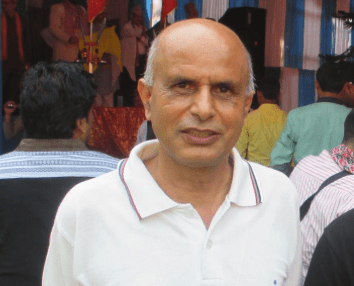
Deo Narayan Sharma (DNS) Dhakal is one of the few first-generation leaders of Bhutanese refugees who is still actively advocating for human rights, democracy, and amicable solutions for the Bhutanese people in exile and diaspora. He has authored many research articles and books delving into both professional subjects and issues about Bhutan and its people. His recent book, “Bhutan: Memoir of Refugee Struggle and Suggestions for an Amicable Resolution,” is possibly the largest book on Bhutan published by the Bhutanese diaspora. Read full
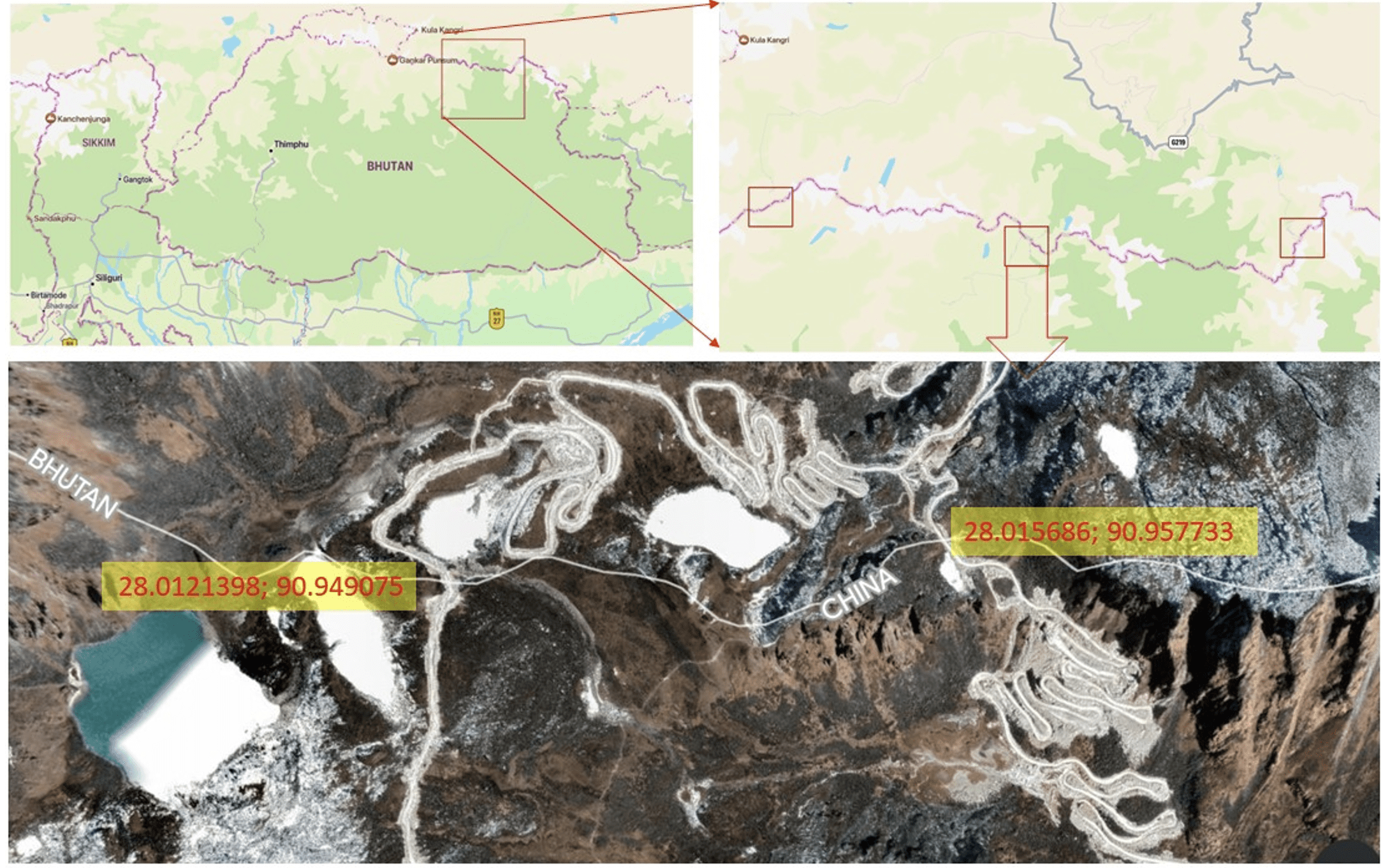
The Bhutan-China relationship was mostly perceived as sandwiched between China and India, but no more. Bhutan is no more India’s pet in dealings and connections. With perennial road connectivity between Bhutan and China, Bhutan is no longer India-locked. Now, Bhutan has a second country to drive in and out without having to go through India. China had been teasing India at the Doklam Plateau in Bhutan’s west, and the three countries make spring news when the Chinese soldiers come south of the Himalayas to the sensitive trijunction every year. When the reporters, news media, and politicians were busy exchanging volleys of accusations, the governments of Bhutan and China were silently working in the disputed Pasamlung and Jakarlung regions connecting the two countries with perennial roads. Both Pasamlung and Jakarlung regions were under dispute between the two neighbours. Today, Bhutan’s Lhuentse District and China’s Lhodruk County are connected by newly constructed highways. Now Bhutan roads connect to two Chinese highways: Lajie Highway and Xincangpo Highway. On the Bhutan side, the highways get Drukpa names Jakarlung Highway and Lagyap Highway. The two highways cross the international border at coordinates 28.0121398N, 90.949075 E (Lajie Highway China or Lagyap Highway Bhutan) and 28.015686N and 90.957733 E (Xincangpo Highway China and Jakarlung Highway Bhutan). Roads from China have reached the Bhutan border at two other points, one road is heading towards Bumthang District and the other Gongla Highway has reached the border of Tashiyangtse District. The Chinese Road has reached the border of Tashiyangtse District at 28.014406 N and 91.280827 E. This wait for a crossover could be to evaluate the situation and response. With these land intrusions from China, the remote districts of Luntse, Tashi Yangtse and Bumthang will have road access to the outside world. Although Lhuentse District of Bhutan and Lhodruk County of Tibet are recently connected by roads, the people on the two sides of the borderline share historical linkages. Lhodruk…
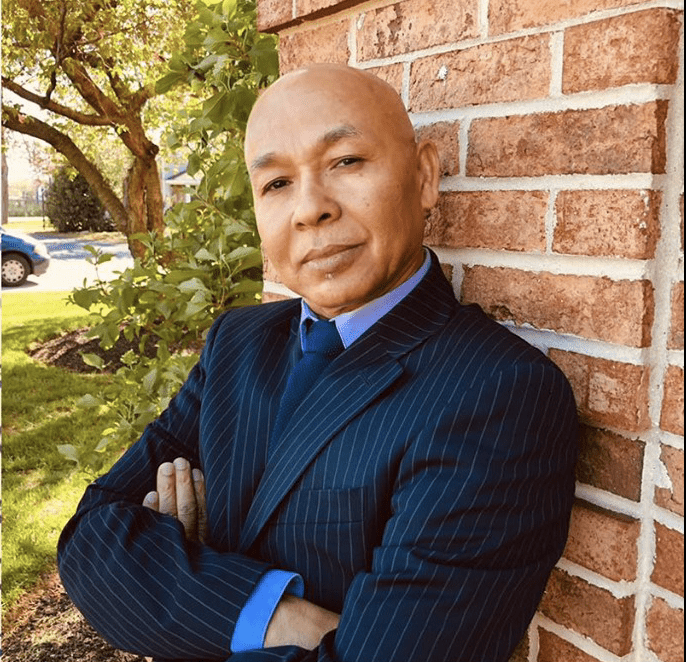
Bishwanath Chhetri (BNC) has been a leader of Bhutanese people since the conception of the Student Union of Bhutan (SUB) in 1988. He continued his activism in exile and the United States of America after the refugees were resettled in global north countries. He is actively involved in activities for preserving Bhutanese identity and history. He has inspired a generation of people with his words and actions. He is a member of the Governor’s Advisory Commission on Asian Pacific American Affairs in Pennsylvania. Govinda Rizal of The Bhutan Journal (TBJ) approached Chhetri for a written conversation. Read in full
Citizenship of a state is the right of the holder to have the same rights as any other member of the state. In contrast, categorization of citizenship creates distinct groups with different limitations, rights, and privileges and makes citizens unequal before the law. In Bhutan, there are three major and seven subcategories of citizens created by the government. The three major categories include ‘natural-born citizen of Bhutan,’ ‘Bhutanese citizen by registration,’ and ‘naturalized citizen of Bhutan.’ Based on marriage and presence or absence during regular and surprise censuses, there are seven sub-categories of citizens ranked F1 to F7, the abbreviations of the files (F) in which their names are listed. Marriage laws of Bhutan discourage marriages between a Bhutanese citizen and a non-Bhutanese spouse through lifelong penalties and demotion in citizenship categories. While both polyandry and polygamy are legal for up to four marriages, the encouragement is on intra-category marriages. The marriage law applies even to the crown prince, who is a successor of the throne, that he must marry only ‘natural-born citizen of Bhutan’ to remain eligible to the throne. This article highlights the background of promulgation of citizenship and marriage laws and their implication, so that future researchers can compare the Bhutanese and international laws and study how the outlook of the people are shaped. Read full
Father David Townsend worked with the refugee education of the Bhutanese refugee students in Nepal. His contribution to the students deserves historical archiving. I P Adhikari and Govinda Rizal of Bhutan Watch approached Father David for a written interview. He has given insightful information of the education system in refugee camps in the final years of the 20th century and several other facts related to Bhutan and Bhutanese refugees. Read Full
Abstract Today, more than 80,000 Americans are Bhutan-born. It took about three decades and billions of dollars in the process to move them from Bhutan to America (the USA and Canada). The Bhutanese people (now Bhutan-born Americans) of Gorkha extraction and Buddhism accommodative Hindus were adherent royalists. These people were politically marginalised in Bhutan by Drukpa rulers for more than a century. They were deprived of a global outlook of the world perspective and were kept away from political institutionalisation. They needed education on global economics, politics, diplomacy, and market. They needed wider exposure to global political orientation and behaviour. Before they could claim their political rights, they were segmented, categorised, antagonised, and evicted from Bhutan. The situation turned beyond their control. They were perceived political opponents. Based on racial, ethnic, linguistic, and religious differences, the Royal Government of Bhutan revoked their citizenship and expelled them from the country. More than 200,000 of their brethren who could survive the expulsion are still in Bhutan living with limited rights to total deprivation. Thousands of those evicted people are in hideouts in India. Others who took refuge in Nepal were invited to resettle in the USA and for diplomatic correctness in its friend countries, namely the UK, Netherlands, Norway, Sweden, Australia, and New Zealand. The Bhutanese people have walked an adventurous journey from Bhutanese nationals to Bhutan-born Americans. The saga seems to have a happy ending here. However, the exercise to educate these people with global socio-economic-political conundrum has come to an unfortunate doldrum. Unless external catalysts educate them on their purposes, the Bhutan-born Americans are destined to remain a part and parcel of the American workforce then look back to complete the unfinished agenda or balm their brethren left behind. In this article, an attempt is made to recall in chronological order, how and when the people born in Bhutan were made American. Keywords: Bhutanese, Bhutanese refugees, Drukpa, migration, third country…
ABSTRACT What was the need of the Orange Army with strength more than that of the Royal Bhutan Army or the Royal Bhutan Police? The Orange Army called De-Suung (Organisation) and Desuup (members) established in 2010 on the auspicious of the King’s thirtieth birthday is now the largest force in the country with more than 18,000 permanent members from all walks of life and all corners of the country. Formed on the principle of volunteerism, the Orange Army is dedicated to crowd control, rescue and operation during emergencies, takes up the role of alert citizens. Now, it is the fastest-growing organisation in the country. Its formation and functioning are outside the expectation of the constitution. However, the King who is the guardian of the constitution and the supreme commander in chief of armed forces and militia is also the supreme commander of this extra-constitutional Orange Army. While the King needs a recommendation from the Prime Minister to command the army and police, the government has no control over the Orange Army, formed and run by the King who commands it directly. The Orange Army is now running a parallel government and is growing incredibly popular among the citizens most of whom are not happy with the democratic parliamentary system in the country and victims of calamities. There is no mechanism to check the cankerous Orange Army if it walks the way of SAVAK, Gestapo, Ku Klux Klan, or the Yakuza except the formation of another extra-constitutional institution to counter it. Keywords: calamities, secret agency, totalitarian, volunteerism, militia, security Read Complete Article
Professor Dr. Michael Hutt, who was until recently Professor of Nepali and Himalayan Studies, at the School of Oriental and Africa Studies (SOAS), University of London, is a renowned scholar on Bhutan studies. He has visited Bhutan, the Bhutanese refugee camps in Nepal, and Bhutanese resettled in developed countries. He has closely studied the refugee saga from the beginning till date. He has authored books and articles in peer-reviewed journals on Bhutanese issues. I P Adhikari and Dr. Govinda Rizal of Bhutan Watch Team approached Dr. Hutt for a conversation on past, present and future of the former and current Bhutanese refugees. Read Complete Interview