Critical Appreciation – Constructive Criticism

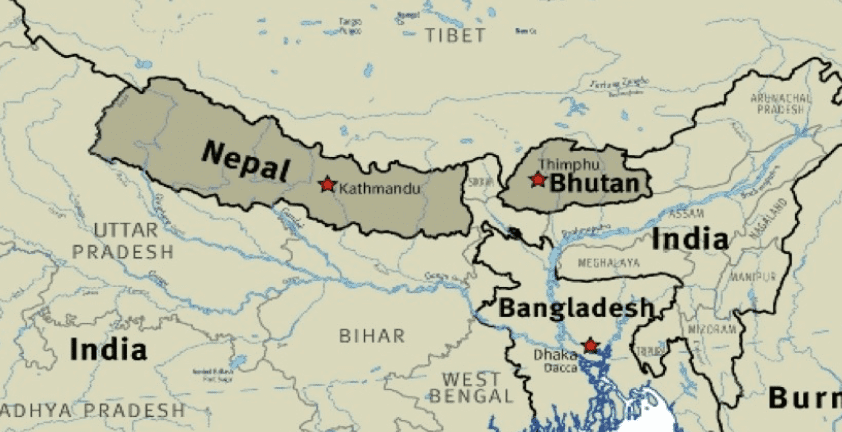
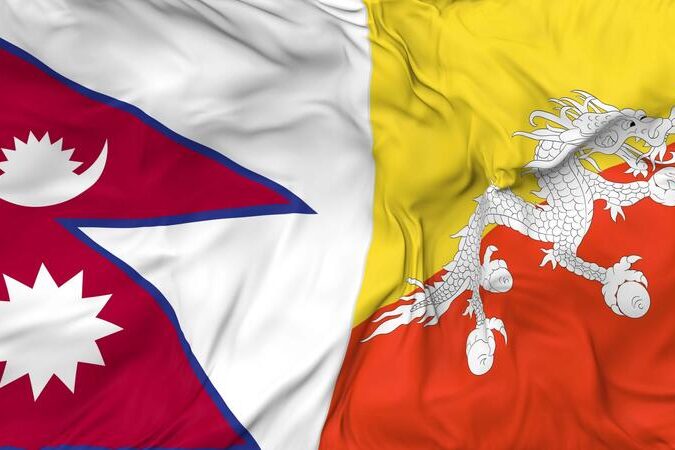
Bhutan and Nepal share similar geographical complexities, population dynamics, religious heterogeneity, cultural beliefs, and global challenges. They are compared here for being the neighbors with the same neighbors, and similar challenges. Bilateral relationships date back to ancient days and written records are available after the 8th Century AD when Guru Padmasambhava visited Bhutan and Nepal and connected the two countries with religion and migration of people. Read Full

Photo source: Public Information Bureau, GOI

Bhutan-India relations are shaped by the changing geopolitical need and conflicting security arrangements in the Himalayas. The countries call it ‘warm relations’ which are rather defined by the changing political interest of the stronger neighbour – India. This article shall look into the geopolitical shift in the Himalayan belt, its influence in Bhutan and tuning of the Bhutanese security policies to suit the need of the hour. It shall also examine the reasons for shift in those security policies at different time periods. Read full

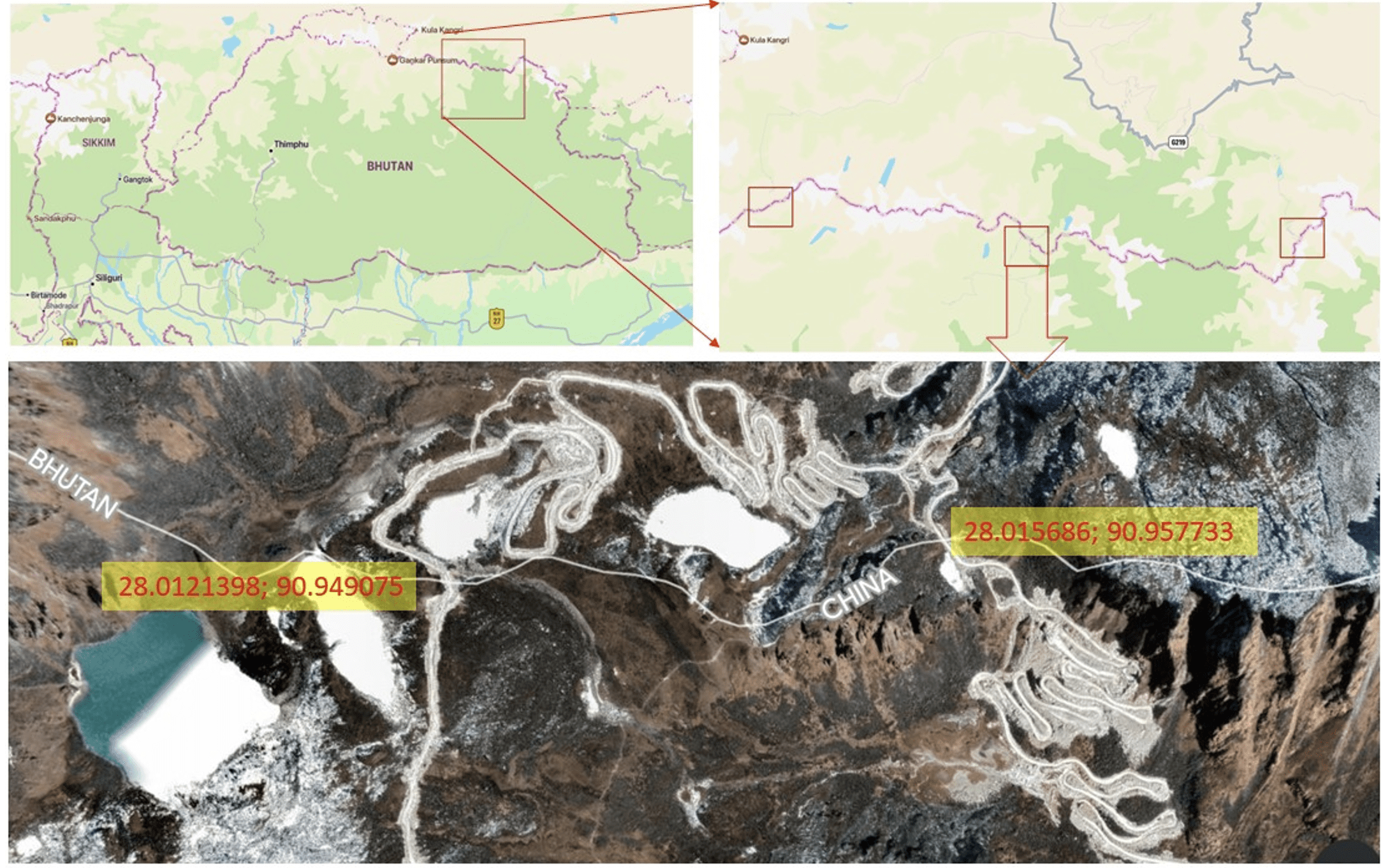
The Bhutan-China relationship was mostly perceived as sandwiched between China and India, but no more. Bhutan is no more India’s pet in dealings and connections. With perennial road connectivity between Bhutan and China, Bhutan is no longer India-locked. Now, Bhutan has a second country to drive in and out without having to go through India. China had been teasing India at the Doklam Plateau in Bhutan’s west, and the three countries make spring news when the Chinese soldiers come south of the Himalayas to the sensitive trijunction every year. When the reporters, news media, and politicians were busy exchanging volleys of accusations, the governments of Bhutan and China were silently working in the disputed Pasamlung and Jakarlung regions connecting the two countries with perennial roads. Both Pasamlung and Jakarlung regions were under dispute between the two neighbours. Today, Bhutan’s Lhuentse District and China’s Lhodruk County are connected by newly constructed highways. Now Bhutan roads connect to two Chinese highways: Lajie Highway and Xincangpo Highway. On the Bhutan side, the highways get Drukpa names Jakarlung Highway and Lagyap Highway. The two highways cross the international border at coordinates 28.0121398N, 90.949075 E (Lajie Highway China or Lagyap Highway Bhutan) and 28.015686N and 90.957733 E (Xincangpo Highway China and Jakarlung Highway Bhutan). Roads from China have reached the Bhutan border at two other points, one road is heading towards Bumthang District and the other Gongla Highway has reached the border of Tashiyangtse District. The Chinese Road has reached the border of Tashiyangtse District at 28.014406 N and 91.280827 E. This wait for a crossover could be to evaluate the situation and response. With these land intrusions from China, the remote districts of Luntse, Tashi Yangtse and Bumthang will have road access to the outside world. Although Lhuentse District of Bhutan and Lhodruk County of Tibet are recently connected by roads, the people on the two sides of the borderline share historical linkages. Lhodruk…

Abstract Today, more than 80,000 Americans are Bhutan-born. It took about three decades and billions of dollars in the process to move them from Bhutan to America (the USA and Canada). The Bhutanese people (now Bhutan-born Americans) of Gorkha extraction and Buddhism accommodative Hindus were adherent royalists. These people were politically marginalised in Bhutan by Drukpa rulers for more than a century. They were deprived of a global outlook of the world perspective and were kept away from political institutionalisation. They needed education on global economics, politics, diplomacy, and market. They needed wider exposure to global political orientation and behaviour. Before they could claim their political rights, they were segmented, categorised, antagonised, and evicted from Bhutan. The situation turned beyond their control. They were perceived political opponents. Based on racial, ethnic, linguistic, and religious differences, the Royal Government of Bhutan revoked their citizenship and expelled them from the country. More than 200,000 of their brethren who could survive the expulsion are still in Bhutan living with limited rights to total deprivation. Thousands of those evicted people are in hideouts in India. Others who took refuge in Nepal were invited to resettle in the USA and for diplomatic correctness in its friend countries, namely the UK, Netherlands, Norway, Sweden, Australia, and New Zealand. The Bhutanese people have walked an adventurous journey from Bhutanese nationals to Bhutan-born Americans. The saga seems to have a happy ending here. However, the exercise to educate these people with global socio-economic-political conundrum has come to an unfortunate doldrum. Unless external catalysts educate them on their purposes, the Bhutan-born Americans are destined to remain a part and parcel of the American workforce then look back to complete the unfinished agenda or balm their brethren left behind. In this article, an attempt is made to recall in chronological order, how and when the people born in Bhutan were made American.      Keywords: Bhutanese, Bhutanese refugees, Drukpa, migration, third country…
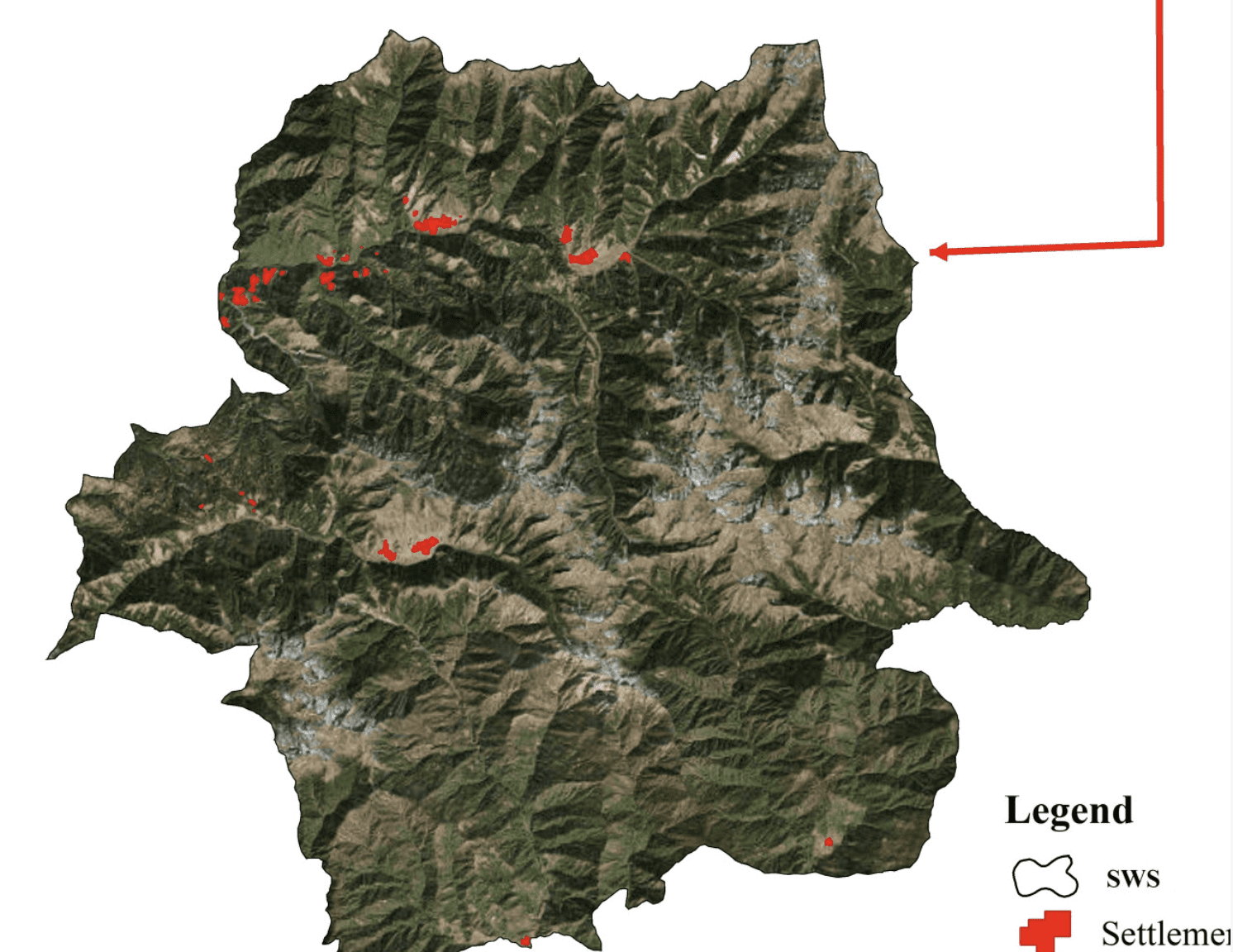
Bhutan and China have landed into fresh border dispute – this time quietly in an international forum, details of which have started coming out only recently, bit by bit. Indian media have been quick to pick the issue articulating this to be another indirect pressure on India. The Bhutan-China border dispute has emerged amidst the heightened tension along Indo-China border. Context UN’s Global Environment Facility had its virtual meeting in the beginning of last month to approve several grants related to climate change and environmental preservation. The GEF Council discussed and approved USD 5.4m grant application put forth by Bhutan for biodiversity in Sakteng Wildlife Sanctuary in the eastern district of Trashigang. China opposed the proposal and did not join the council decision. China claimed that Sakteng was a disputed border region and as such funding should not be approved. Despite China’s objection Bhutan secured the grant funding.  Sakteng Wildlife Sanctuary The GEF had allocated funds for this sanctuary in the past but China had never raised any objection or mentioned it to be an area of border dispute.  Bhutan for the first time went hard against Chinese assertion. Despite ceding a large area in the Gasa district to China, the northern communist nation did not stop border encroachment. Failing to see any intention of the communist regime in resolving the disputes, Bhutan technically started ignoring border talks. When this latest episode hit Bhutan in an international forum, the Himalayan nation formally dispatched demarche to Chinese embassy in New Delhi to express its objection on new Chinese stance.  Without formal diplomatic relations, China and Bhutan communicate through their embassies based in New Delhi. Bhutanese objection The diplomatic note is not publicly available, yet Indian media quote sources saying Bhutan objected China’s position and clarified Sakteng Wildlife Sanctuary is an integral and sovereign territory of Bhutan. According to the GEF Council Chairman’s summary released on June 16, of the virtual meeting…

ABSTRACT A breakthrough in Nepal-Bhutan relationship in the past had been rendered near impossible given the mistrust over refugee issue coupled with lack of autonomy in Thimpu vis-à-vis conduct of its foreign and defence policy. With resettlement of most Bhutanese refugees in third-countries and revision of Bhutan-India Friendship Treaty 1949, there is tremendous scope for strong bilaterally beneficial relationship now. But this will only gain meaningful traction by addressing the refugee saga in some manner. Since only a handful of refugees remain in camps now, Bhutan can offer to repatriate the remaining refugees under the same process agreed during Joint Ministerial Committee (JMC) meetings and Joint Verification Team (JVT) mechanism without any significant costs. At this stage this may symbolic at best, but will help provide a closure to all parties involved: Nepal can declare success in its bilateral diplomatic dealings; it will help Bhutan salvage its reputation in international forums while further cementing its autonomy in the conduct of its foreign policy; and this will also help close a painful chapter for thousands of Bhutanese refugees who have now become citizens of some other countries. Keywords: Bhutan; diplomacy, Nepal; refugees, relationship; Introduction There are many similarities between Nepal and Bhutan. Both countries straddle the Himalayas and are landlocked—surrounded by India and China. The two countries have huge hydropotentials and can be energy powerhouse of the region. Both the countries are members of Non-Aligned Movement (NAM) and founding members of South Asian Association for Regional Cooperation (SAARC) (Bhattarai, 2019). The two countries have joined Bay of Bengal Initiative for Multi-Sectoral Technical and Economic Cooperation (BIMSTEC) since 2004 (BIMSTEC, 2019). Historically, the two countries have been friends. Even as Nepal began experimenting democratic rule since the 1950s, it was not until early 90s that Bhutan transitioned to some semblance of democracy. Bhutan is home to a sizeable population of Nepali origin—with records of migration dating back as far back as early…

ABSTRACT Security threat posed by rising China in Indo-Pacific region has raised fear of possible shift in the world order – that had remained under tight fist of the United States for over a century. China is flexing its economic and military muscles that is likely to substitute America’s dominance in international politics. As China crawls into Asia Pacific region, the US has unveiled its new strategy to counter the rise of Communist China. Regional allies and stronger security relation are of paramount importance for this strategy to succeed. This paper examines what Indo-Pacific Strategy means for South Asia and Bhutan in particular. How this tiny Himalayan Kingdom would play its role and what are possible advantages? It also includes the role of India in courting Bhutan into the bigger international gambit to surround China and what India and US must do jointly to ensure the success of the strategies. Key words: communism, democracy, diplomacy, military, politics, strategies, Indo-pacific Introduction While unveiling Indo-Pacific Strategies in 2018, US Secretary of State Mike Pompeo said “American people and the whole world have a stake in the Indo-Pacific’s peace and prosperity. It’s why the Indo-Pacific must be free and open (Hartman, 2019).” US state department describes this statement as ‘an ironclad and enduring commitment’ (US State Department, Office of the Assistant Secretary, 2018)  to the region. The strategy basically targets creating more democratic and open society in Indo-Pacific region to counter China’s undemocratic growing influence. Bhutan is small country but can be a major player under this flagship strategy within the Indian domain. India’s involvement in engaging Bhutan on this strategic initiative of the US government is of paramount important. The initiative must not ignore the undemocratic behaviours of Bhutan government– past and present. India is not an alien when it comes to the Bhutanese refugee issue. For decades, a democratic country aligned with an absolute monarchy to curb the voice for democratic…