Critical Appreciation – Constructive Criticism

Hari Bangaley Adhikari is based in Cincinnati, OH. He was resettled from Bhutanese refugee camp as part of the third country resettlement of the Bhutanese refugees. He lived in exile in Nepal for 18 years, during which he championed political and social activism overcoming the uncertainty, deprivation and psychological troll that define life as a refugee. Adhikari continues his advocacy for justice, recognition, and historical accountability post his resettlement in the US. Read Full
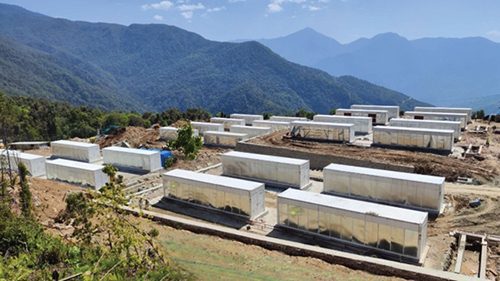
Bhutan has quietly emerged as a significant player in the cryptocurrency space. This article presents a comprehensive overview of Bitcoin and digital currency mining in Bhutan, addressing its history, infrastructure, economic impact, geopolitical implications, and current usage at both national and consumer levels. I shall explore how global trends in Bitcoin and digital currencies compare with Bhutan’s unique journey, and how Bhutan’s strategic approach – harnessing renewable energy for crypto mining – has led it to hold a substantial digital asset reserve. The analysis covers major milestones from Bitcoin’s inception to Bhutan’s recent ventures, and provides insight into why Bhutan embarked on this path, what it means for its economy, and how digital currencies are being used on the ground. Read Full

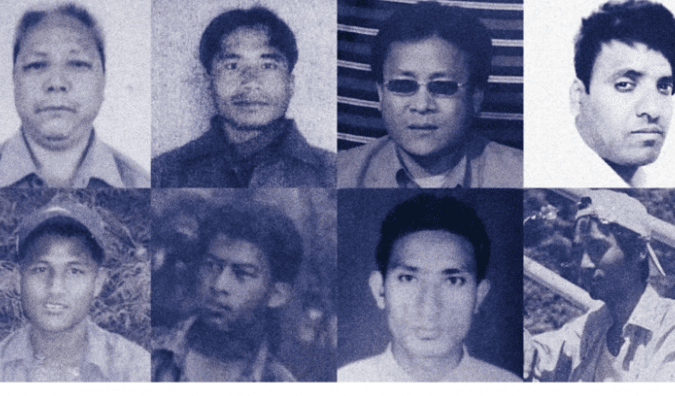
Bhutan is internationally recognised for its political stability and Gross National Happiness philosophy but its long-term detention of the mostly Nepali-speaking Bhutanese activists raises serious human rights concerns. This article examines Bhutanese political detention based on latest UN, EU and INGO reports, media coverage, and civil society advocacy. It explores state’s policy of denial, the nature of international engagement (including the Universal Periodic Review), and diaspora-led campaigns such as by GCRPPB. The article provides comprehensive insight through case studies, and UN legal opinions. The persistent state denial impedes accountability and reform. Individual case studies highlight legal and human impacts, while regional comparisons and UN opinions place Bhutan’s situation in a broader context. Read Full

Over the past decade, Bhutan has experienced a marked rise in lifestyle-related health problems as traditional patterns of living give way to modern habits. This paper examines emerging non-communicable diseases and risk factors in Bhutan from ~2015–2025, drawing on government data, surveys, and academic studies. It reviews Bhutan’s traditional active, agrarian lifestyle and diet, then detail how rapid socio-economic development has altered lifestyles. Sedentary behaviour, processed diets, and other changes have led to increasing obesity, diabetes, and cardiovascular diseases. The causes of these shifts – urbanisation, globalisation, and changing socio-cultural norms – are explored. The paper analyses the geographical distribution of lifestyle diseases and the age groups affected. Health expenditure trends are reviewed, showing growing government spending on non-communicable disease prevention and treatment. Read Full

Bhutan and Nepal share similar geographical complexities, population dynamics, religious heterogeneity, cultural beliefs, and global challenges. They are compared here for being the neighbors with the same neighbors, and similar challenges. Bilateral relationships date back to ancient days and written records are available after the 8th Century AD when Guru Padmasambhava visited Bhutan and Nepal and connected the two countries with religion and migration of people. Read Full

The relationship between Gelephu and the Bhutanese in exile, particularly the Nepali speaking community, is a complex narrative shaped by socio-political movements, demographic shifts, and state policies. This paper examines key historical events, including the political awakening in 1950, 1990s, the king’s visits and assurances, the mass exodus of Nepalis, and the subsequent resettlement of northern Bhutanese in Gelephu. Through an analysis of these events, this study highlights the enduring emotional and cultural ties between Gelephu and the exiled Bhutanese, as well as the broader implications for identity, citizenship, and national unity in Bhutan. Read full

The Gelephu Mindfulness City (GMC) is established as an independent entity with executive, legislative and judiciary independence. The city is unlikely to have political independence though. The ‘one country, two systems’ which is rarely practiced around the world except for the case of Hong Kong and Macau when they were returned to China from colonial powers. While these two territories were returning to their homeland from foreign rule, the GMC proposition is the other way round – Bhutan wants to separate Gelephu from its conservative rule and give some autonomy. In Hong Kong and Macau, the civil society had practiced the democratic exercise and enjoyed civil liberties which were essential to maintain the social fabric upon their return to China. In Gelephu, residents have not lived to adopt liberal thoughts or nurture the culture of democracy. This basic difference will determine the success of a ‘one country, two system’ test in Bhutan. Read full

The GeSAR represents a groundbreaking initiative with executive, legal, and policy autonomy. Established by a Royal Charter issued in February 2024, the GeSAR operates under a unique legal framework. While Bhutan’s Constitution does not explicitly provide for SARs, Article 2, Section 16e grants the King prerogatives for actions not covered by existing laws, legitimising the SAR’s creation to some extent. The Local Government Act 2009, which governs local administrations, does not envision an SAR, suggesting the GMC operates outside current legal structures. Parliamentary approval was bypassed and national referendum was not deemed appropriate. This article shall look into constitutional, legal and other operational hurdles in the GMC realisation. Read full

Gelephu faces significant infrastructure challenges, hindering its transformation into a major commercial hub. Despite its flat terrain, which is conducive to development, the town has repeatedly failed to evolve due to inadequate infrastructure. A notable issue is water scarcity, exacerbated by climate change and poor management. Other primary infrastructures such as sanitation, waste management, housing, educational facilities, health amenities and transport are not well planned to cater to the need of a futuristic city. This article traces the challenges of Gelephu in attaining these basic infrastructures that are fundamental to building a mega city. Read full