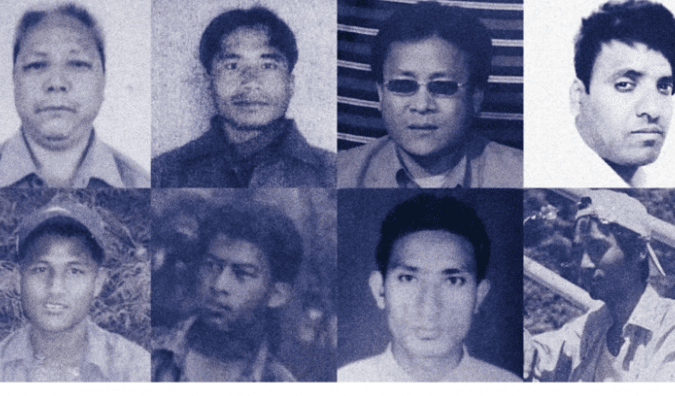
Bhutan is internationally recognised for its political stability and Gross National Happiness philosophy but its long-term detention of the mostly Nepali-speaking Bhutanese activists raises serious human rights concerns. This article examines Bhutanese political detention based on latest UN, EU and INGO reports, media coverage, and civil society advocacy. It explores state’s policy of denial, the nature of international engagement (including the Universal Periodic Review), and diaspora-led campaigns such as by GCRPPB. The article provides comprehensive insight through case studies, and UN legal opinions. The persistent state denial impedes accountability and reform. Individual case studies highlight legal and human impacts, while regional comparisons and UN opinions place Bhutan’s situation in a broader context. Read Full
Bhutan-India relations are shaped by the changing geopolitical need and conflicting security arrangements in the Himalayas. The countries call it ‘warm relations’ which are rather defined by the changing political interest of the stronger neighbour – India. This article shall look into the geopolitical shift in the Himalayan belt, its influence in Bhutan and tuning of the Bhutanese security policies to suit the need of the hour. It shall also examine the reasons for shift in those security policies at different time periods. Read full
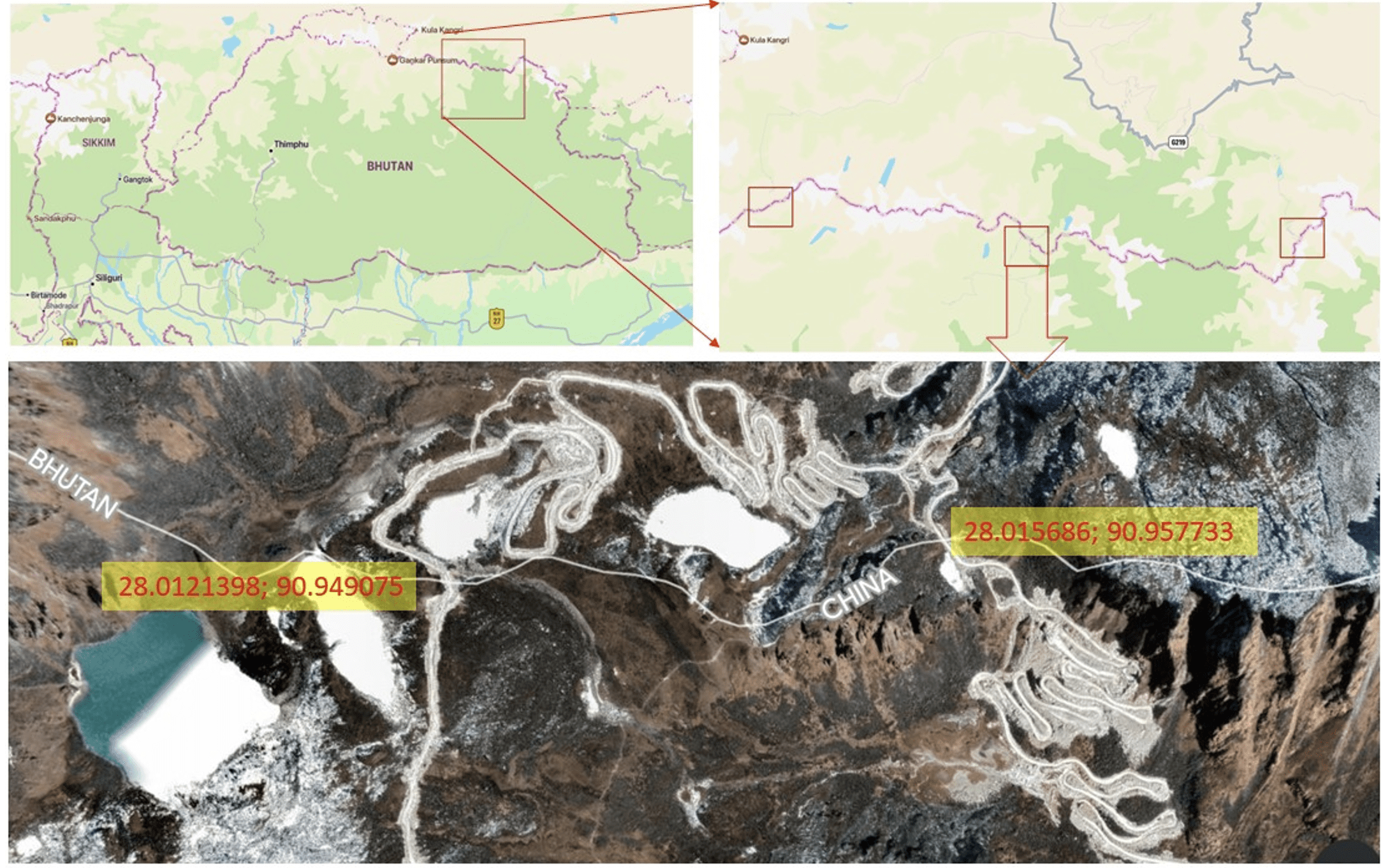
The Bhutan-China relationship was mostly perceived as sandwiched between China and India, but no more. Bhutan is no more India’s pet in dealings and connections. With perennial road connectivity between Bhutan and China, Bhutan is no longer India-locked. Now, Bhutan has a second country to drive in and out without having to go through India. China had been teasing India at the Doklam Plateau in Bhutan’s west, and the three countries make spring news when the Chinese soldiers come south of the Himalayas to the sensitive trijunction every year. When the reporters, news media, and politicians were busy exchanging volleys of accusations, the governments of Bhutan and China were silently working in the disputed Pasamlung and Jakarlung regions connecting the two countries with perennial roads. Both Pasamlung and Jakarlung regions were under dispute between the two neighbours. Today, Bhutan’s Lhuentse District and China’s Lhodruk County are connected by newly constructed highways. Now Bhutan roads connect to two Chinese highways: Lajie Highway and Xincangpo Highway. On the Bhutan side, the highways get Drukpa names Jakarlung Highway and Lagyap Highway. The two highways cross the international border at coordinates 28.0121398N, 90.949075 E (Lajie Highway China or Lagyap Highway Bhutan) and 28.015686N and 90.957733 E (Xincangpo Highway China and Jakarlung Highway Bhutan). Roads from China have reached the Bhutan border at two other points, one road is heading towards Bumthang District and the other Gongla Highway has reached the border of Tashiyangtse District. The Chinese Road has reached the border of Tashiyangtse District at 28.014406 N and 91.280827 E. This wait for a crossover could be to evaluate the situation and response. With these land intrusions from China, the remote districts of Luntse, Tashi Yangtse and Bumthang will have road access to the outside world. Although Lhuentse District of Bhutan and Lhodruk County of Tibet are recently connected by roads, the people on the two sides of the borderline share historical linkages. Lhodruk…
Introduction In a new ‘democratic’ Bhutan, a lady’s failed attempt to overthrow the army chief and influence the highest authority in the county’s legal system raised questions if the country has the capacity to deter future conspiracies that could be complicated and sophisticated than this. The story received massive public attention and stirred inconclusive debates purely because the country has liberalised politics and media industry, though in miniature form, exist. Many stories of this nature vanished in history and have become folklores. The latest scandal would have much bigger implications in public psychology had it been not shadowed by the COVID 19 pandemic. The story revolves around four individuals – Bomden Khandu Wangmo, former Royal Bodyguard (RBG) Commandant Brigadier Thinley Tobgay, Supreme Court Justice Kuenlay Tshering (Elephant Bench or Bench 1) and Pemagatshel District Judge Yeshey Dorji. The Thimphu District Court on 23 July sentenced these four individuals to a prison term ranging from five years to 10 years. Chief Operations Officer Batoo Tshering with RBG Commandment Thinley Tobgay The charge sheet of the Office of Attorney General (OAG) mentions, ‘as the offenses committed by the defendants are highly sensitive, grievous, most serious in nature and detrimental to the very core of national security, peace and sovereignty of the country, they must be given the maximum sentencing’. Though total sentences pronounced against them are much longer, the court agreed for concurrent sentences and some of them can pay Thrimthue[1] in lieu of imprisonment for certain offences and charges. Lead Lady The story revolves around Khandu Wangmo – a lady who whirled power in disguise in such a sophisticated way that caused a major stir in the national security and judiciary. Wangmo, 41, from Thimphu, started her career as an English teacher in Drukgyel School in Paro but left the profession early on. She worked in the Indian Embassy in Thimphu as a Social Secretary cum Liaison Officer between 2012 and 2016.…